To be cited as: Menezes Asseff, Matthaeus. 2026. CAMAMAZON. LINK: https://camamazon.aber.ac.uk/2026/07/09/journey-for-a-better-life-a-migration-from-rio-grande-do-norte-to-guaruja/ (accessed XX/XX/XX).
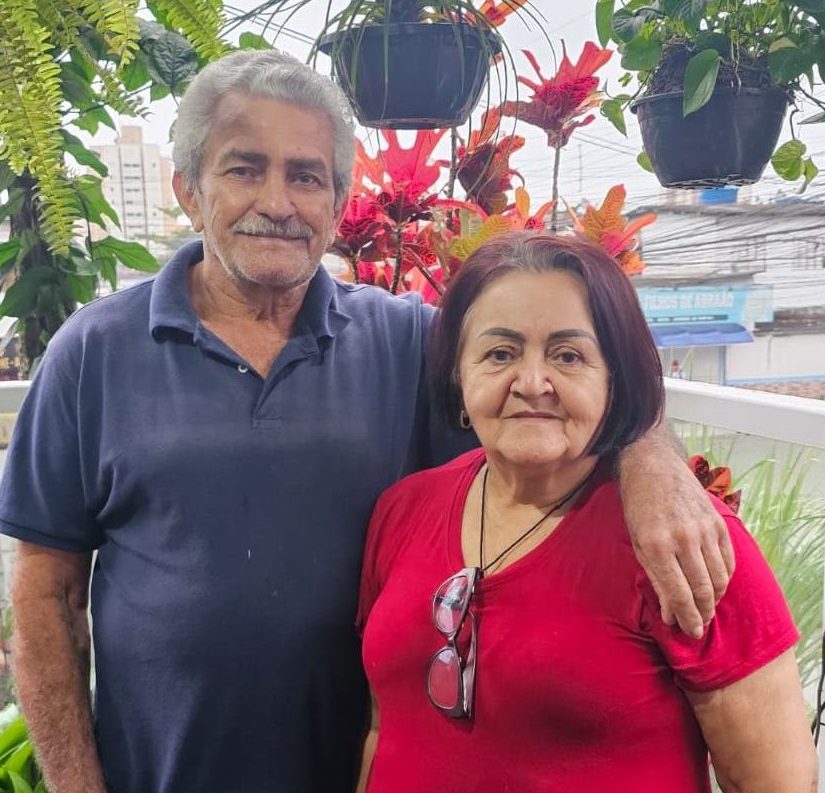
I met Raimundo Novo Sarmento (75) and Irismar Alves de Oliveira Sarmento (71) through their grandson, and my best friend, Matheus Oliveira. We met at school at the age of 11, and grew up playing sports and video games together. He started working in his grandfather’s small shop when he was 13, and I used to hang out there to keep him company – listening to his grandparents’ stories right alongside him.
I remember studying the book Vidas Secas (Barren Lives), a story about the hardships faced by a family from the Northeast as they contended with droughts and the challenges of rural life, including climatic, social, and economic struggles. Since I am writing a blog about territory, bringing the perspectives from my grandmother and how her territory changed. I decided to bring in perspectives and voices from the sertão (the arid hinterlands). That is why I chose to interview Matheus’s grandparents for this blog. Their story mirrors the lives of so many Brazilians who migrate from the Northeast of Brazil to other states in search of a better life. Given the blog’s focus on territory, we discussed their experiences in both Natal and here in Guarujá—the city where I was born and where they settled, rebuilding their lives through a journey defined by their migration and its intersection with the environmental and urban transformations of Guarujá.
Born and raised in the countryside of Rio Grande do Norte, in the Brazilian Northeast, Raimundo and Irismar lived a childhood deeply connected to the land. Raimundo began working as a child, at seven or eight years old, learning from his parents and grandparents how to grow maize, beans, rice, cotton, and other things. He told me how he misses walking in the forest: “Depois que a gente sai da agricultura, a gente ainda sente saudade. Já de daquela liberdade que a gente tinha de vivre na roça, que é muito gostoso, assim.Pessoa vivendo todo dia na,a vendo aquelas coisa diferente, pra tá morando numa cidade, né? É um pouco, é um pouco diferente mesmo, né“. (“After we leave agriculture, we still miss it. We miss that freedom we had living in the countryside, which was very pleasant. A person living every day there, seeing those different things, then going to live in a city, right? It is a bit, it is really quite different, isn’t it?“)
He tells me how he hunted birds and fish, and they both spoke about the many jaguars, foxes, and lizards that existed there. Raimundo also describes life in the countryside as difficult: “A casinha no sítio, não tinha luz, não, não tinha água encanada, tudo i– dependia da, da gente, né?” (“The little house on the farm had no electricity, no running water, everything depended on us, right?”). They were completely dependent on rainfall and agricultural production. Even in the face of these difficulties, I get the feeling of his longing for the countryside, an affectionate memory of the freedom of rural life and the daily contact with nature, far from the city.
Irismar also recalls the hardships of living on the farm: “Foi muito sofrida a minha vida na, na, na roça, no sítio. Eu, eu não trabalhava na roça, não, mas minhas irmã trabalhava. Eu sempre, assim, eu tinha alergia de, de pó de, dos matos, dos pelo, eu nunca trabalhei não, mas era sofrido. Não tinha água, era, é, faltava água, não tinha água encanada, era água de poço, às vezes faltava, e foi muito sofrida a minha vida, antigamente. Aí eu vim pra cá, foi melhorando.“(“My life in the countryside, on the farm, was very difficult. I did not work on the farm, but my sisters did. I always had allergies to dust, plants, and animal hair, so I never worked there, but life was hard. There was no water, water was scarce, there was no running water, it came from a well, and sometimes it ran out. My life back then was very difficult. Then I came here, and things started to improve.“)
Irismar mainly remembers the scarcity of water, and the isolation. Although she did not work directly in farming because of her allergies, she grew up surrounded by rivers, forests, wild animals, and the cycles of cultivation. Both emphasise that the family knowledge about the land involved planting, harvesting, and recognising the timing of nature. They tell me that this was learned from previous generations, but was not fully passed on to their daughters and grandchildren.
The migration to Guarujá happened in search of survival and better living conditions, just as many other families migrated. The couple describe Northeastern agriculture as work marked by extreme economic instability. At that time, Raimundo arrived first on the coast of São Paulo state, at the end of the 1970s, working as a construction assistant and living in one of the first houses on the hill of Vila Baiana, in Guarujá. Later, Irismar came with the children. They describe to me how these first years were spent on the hill in precarious conditions, and afterwards they moved into a small room in the house of an acquaintance.
Their accounts reveal a very different Guarujá from the present one. According to both of them, the Vila Baiana region was an area of mangroves, mud, dense vegetation, and only a few scattered shacks on the hill. Both report that: “Não tinha a avenida Dom Pedro- Era tudo mato. E aqui era, era, era tipo mangue, sabe? Era cheio de água, de lama, muito mato, muito pássaro, sabe? Então a gente hoje estranha porque não tem nada disso. Tudo é construído.” (“There was no Dom Pedro Avenue — it was all forest. And here it was, it was like mangroves, you know? It was full of water, mud, lots of vegetation, lots of birds, you know? So nowadays we find it strange because none of that exists anymore. Everything is built up.“)
There were no bus lines, paved roads, or urban infrastructure. The neighbourhood where they live today was once dense with birds, water, and vegetation. Little by little, through informal work and self-construction, Raimundo left the hill and moved to a place nearby, where he single-handedly built the brick house in which they still live today, working “de noite e de dia” to build his home.
My conversation with Raimundo and Isrimar reveals the environmental transformation of the territory. The space once occupied by mangroves and forest was gradually urbanised over time. Nature’s noises gave way to traffic, population growth, and urban violence. According to Irismar: “O Guarujá hoje é-é ruim, assim, aqui onde a gente mora, e praticamente, é quase em todo canto. Tem muita violência, muita coisa assim. Embora que em todo canto tem, né?” (“Guarujá nowadays is bad, here where we live, and practically everywhere. There is a lot of violence and many things like that. Although everywhere has that, doesn’t it?“)
Despite recognising that the quality of their life improved materially, especially through achieving home ownership and providing a better life for their children and grandchildren, both demonstrate nostalgia for the tranquillity of the countryside and the closer contact with nature, and Raimundo misses the connection with rural life and cultivation.
The story of Irismar and Raimundo reveals not only a family experience of overcoming hardship, but also a collective narrative about migration, belonging, and the transformation of the spaces and territories of Brazil. These stories connect with my family’s own experience in the territory of Guarujá and identify how intense urbanisation transformed both lives and territories together.
This blog is part of a conversation between CAMAMAZON project members on our relationship to the territories of a multi-territorial ethnography. For more in the series, see: Territories.