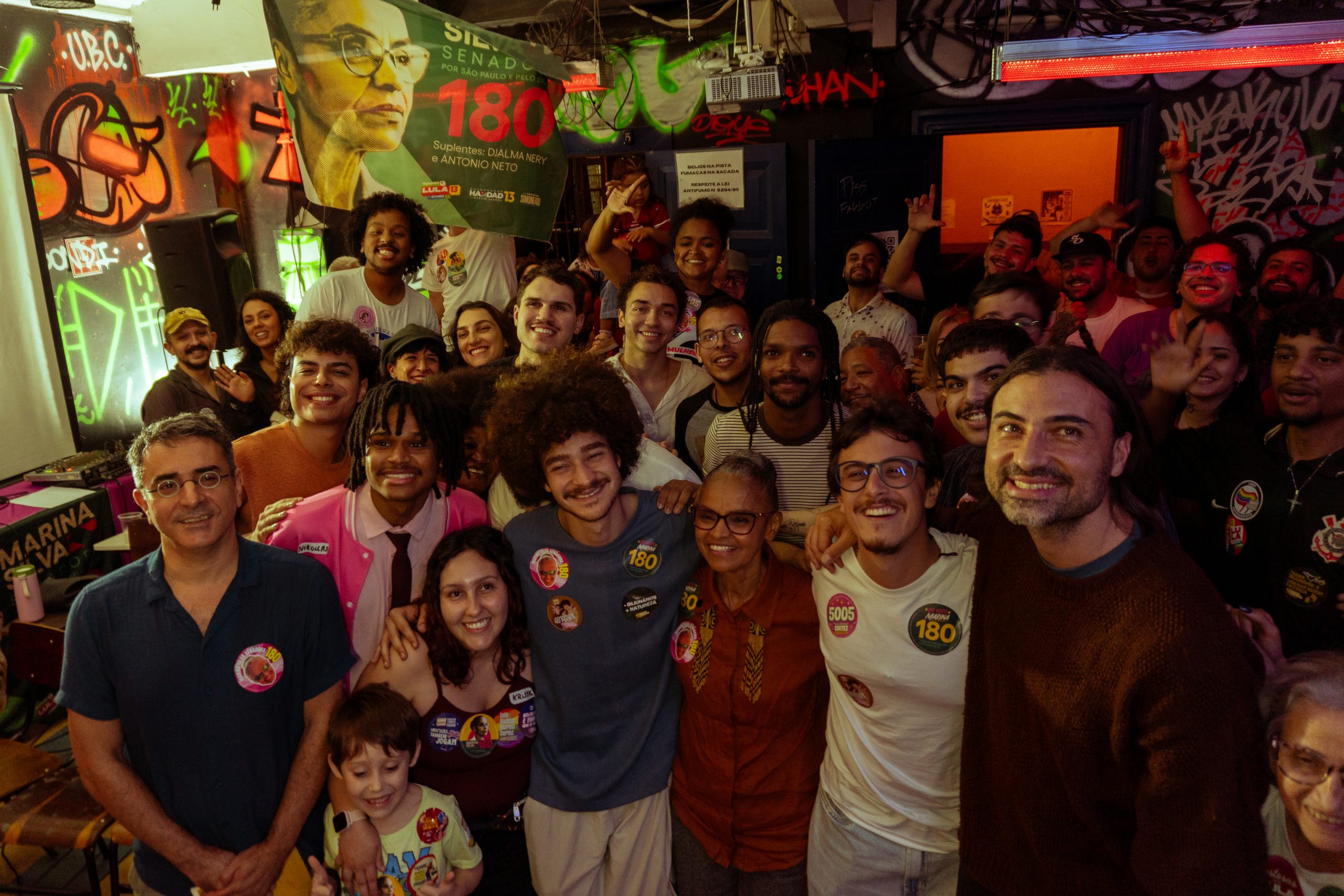
The civil society and politicians together. Photo taken by Manoella Marinho.
To be cited as: Menezes Assef, Matthaeus. 2026. “An event between civil society and policymakers to raise concerns in Brazilian climate politics” CAMAMAZON. Available at: https://camamazon.aber.ac.uk/2026/11/04/an-event-between-civil-society-and-policymakers-to-raise-concerns-in-brazilian-climate-politics/ (accessed: xx/xx/xxxx).
In the current context of global climate crises, debating the future of the environment requires confronting not only scientific data but also the deep social inequalities that run through our communities. I recently participated in the event “Nova política – meio ambiente, clima e direito a cidade (translated to: new politics – environment, climate and right to the city)”, which created a vital space for discussing this critical intersection and formulating proposals. It was organised by Paulo Rogério Noggerini Jr (also known as Paulo Juventude and city councillor of São Roque) and brought together civil society leaders with Marina Silva (head of the Ministry of the Environment and Climate Change from January 2023 to March 2026) and Guilherme Cortez (State Deputy for São Paulo).
The primary aim of this blog is to bring to the fore the concerns raised at this event, not just the politicians already working in the field of environment and climate, but the people who live, work, and feel the daily effects of the climate crisis firsthand. Here, I outline the main interventions made by civil society participants, from the urgent need to combat climate denialism to defending the leadership of peripheral communities, recycling workers, and the strategic role of digital communication in social transformation. My goal is to centre the voices of civil society and to highlight the central issues that we are identifying and the responses what we are demanding from politicians and decision-makers.
The voices of civil society
I participated in this meeting as a science communicator and research assistant in the CAMAMAZON project. I used the opportunity to present research that I had been doing on El Niño for a forthcoming blog. In my intervention, I explained that El Niño is a natural event characterised by the abnormal warming of waters in the Equatorial Pacific Ocean, situated between Peru, Indonesia, and Australia. However, climate change is exacerbating the intensity of El Niño, rendering its impacts increasingly severe.
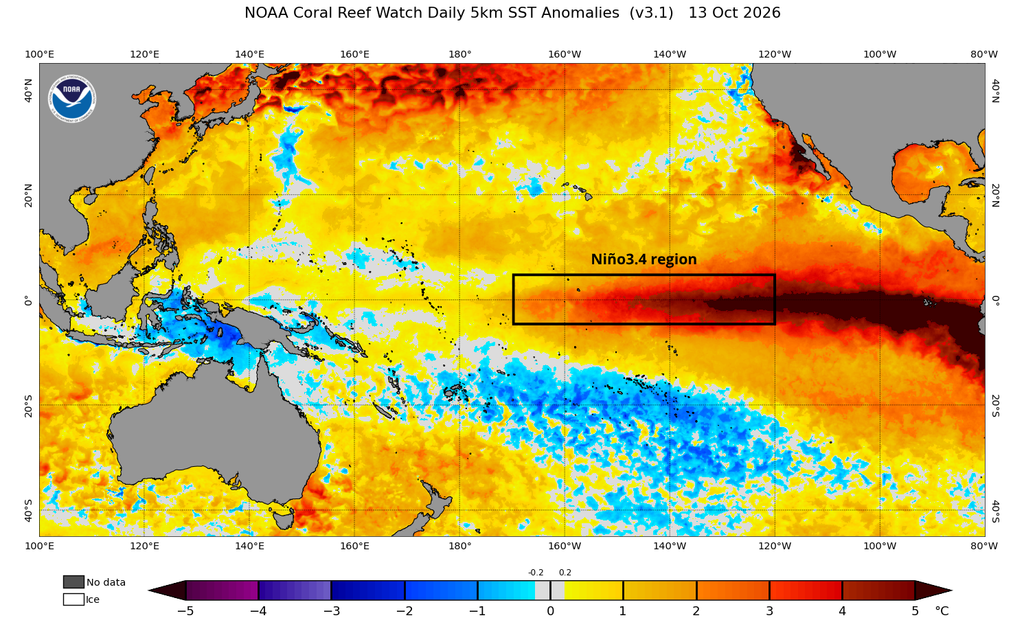
I stressed that because El Niño is a natural phenomenon it is frequently instrumentalised by right-wing and far-right (bolsonarismo) political narratives. The strategy is to attribute extreme weather events exclusively to nature in order to naturalise disasters and evade public authorities’ climate and socio-environmental responsibilities to mitigate, adapt and provide risk management policies.
The former Environment Minister Marina Silva expanded on this reflection during her own intervention, recalling denialist statements in the current political landscape, such as those by senator and presidential candidate Flávio Bolsonaro. He has gone as far as to claim that the planet is cooling rather than warming due to a “cyclical change”. It is precisely to combat this type of disinformation that I reinforced, at the end of my remarks, the urgent need to invest in strengthening science and climate education in schools.
Victória Regina Lima de Oliveira
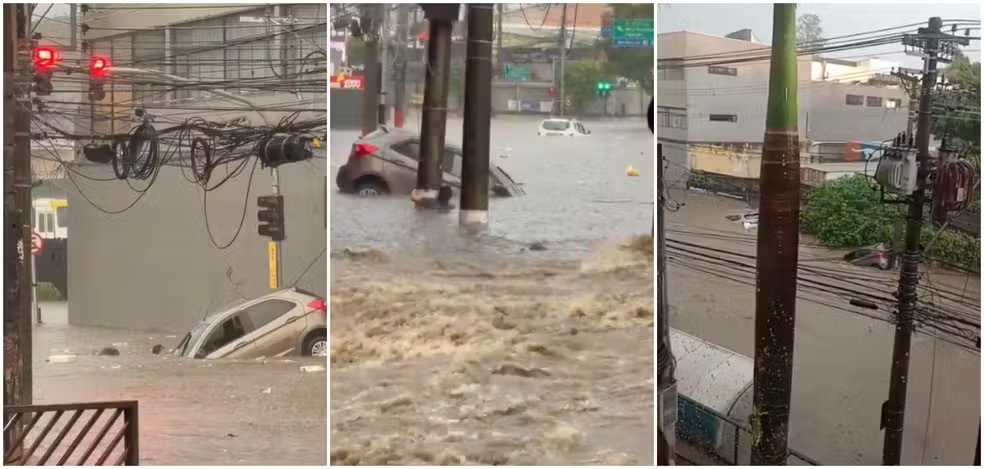
Following these contributions, Vitória Regina, who is also a science communicator, highlighted the socio-environmental dimensions of the climate crisis at the municipal level. In her address, she recalled the heavy rainfall of February 2026 in Guarulhos (next to São Paulo), which left residents stranded, vehicles submerged, and people swept away by floodwaters, to illustrate the direct consequences of a public administration that is negligent and indifferent to the environment.
Drawing on data from the Instituto Decodifica, Vitória highlighted that Brazil recorded over 600 climate disasters in the first four months of 2026 alone. She emphasised that environmental vulnerability follows a well-defined pattern of class and race: low-income, Black, and peripheral populations suffer disproportionately from floods, heatwaves, and a lack of infrastructure.
Although Guarulhos possesses regulatory instruments, such as the Emergency Extreme Heat Plan, Vitoria warned that public policy fails by treating the municipality homogenously, ignoring its deep-seated inequalities. To support her analysis, she cited an Institute of Applied Economi Research (IPEA) study on Brazil’s 20 largest cities, in which the outskits of Guarulhos were identified as an “opportunity desert”, characterised by severe structural deficits in access to employment, services, and transportation.
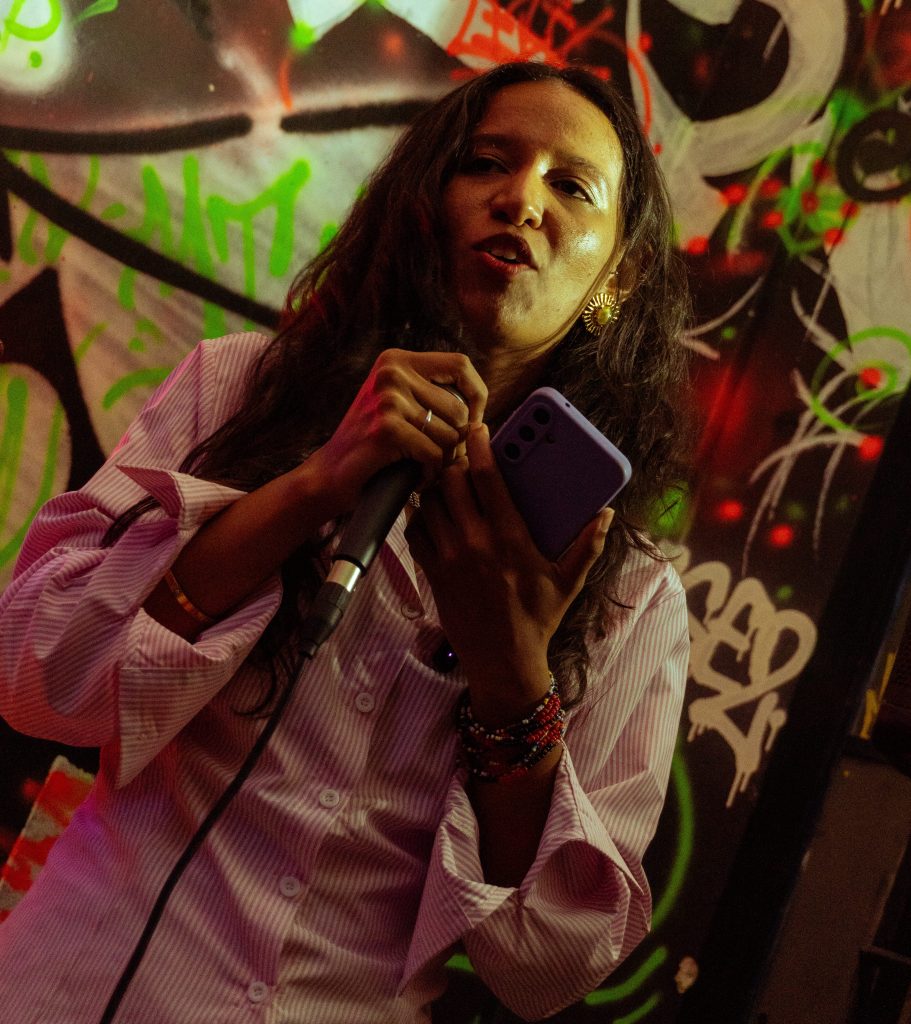
In light of this scenario, Vitória proposed the creation of a Municipal Observatory for Climate Vulnerability, rooted in community-driven citizen science. The proposal aims to map, at a micro-territorial level, neighbourhood by neighbourhood, the intersections between environmental hazards (such as urban heat islands and flooding) and socio-economic vulnerabilities. This would ensure that a technical, participatory diagnosis, rather than political pressure, guides the allocation of public funds for drainage, urban forestry, and public transport. As a positive benchmark, she cited Fortaleza’s monitoring stations installed in peripheral areas, arguing that Guarulhos should go further by actively engaging residents in the process rather than treating them merely as data points on a spreadsheet.
Laura da Cruz Baia
Laura da Cruz Baia opened her intervention with a personal, intergenerational appeal, noting that, as a mother, grandmother, and great-grandmother, she refuses to accept a world collapsed by collective irresponsibility. In a scathing critique of social inaction, she pointed out the chasm between words and deeds, demanding a genuine commitment to socio-environmental transformation.
Through her work with the Pimp My Carroça initiative, Laura works directly with solid waste sorting and the empowerment of waste collectors (catadores – translated to waste pickers). She highlighted the vital role of the project in providing technical assistance, such as the repair and maintenance of waste carts, increasing the visibility of these workers, and educating the public on the correct separation and disposal of recyclable materials.
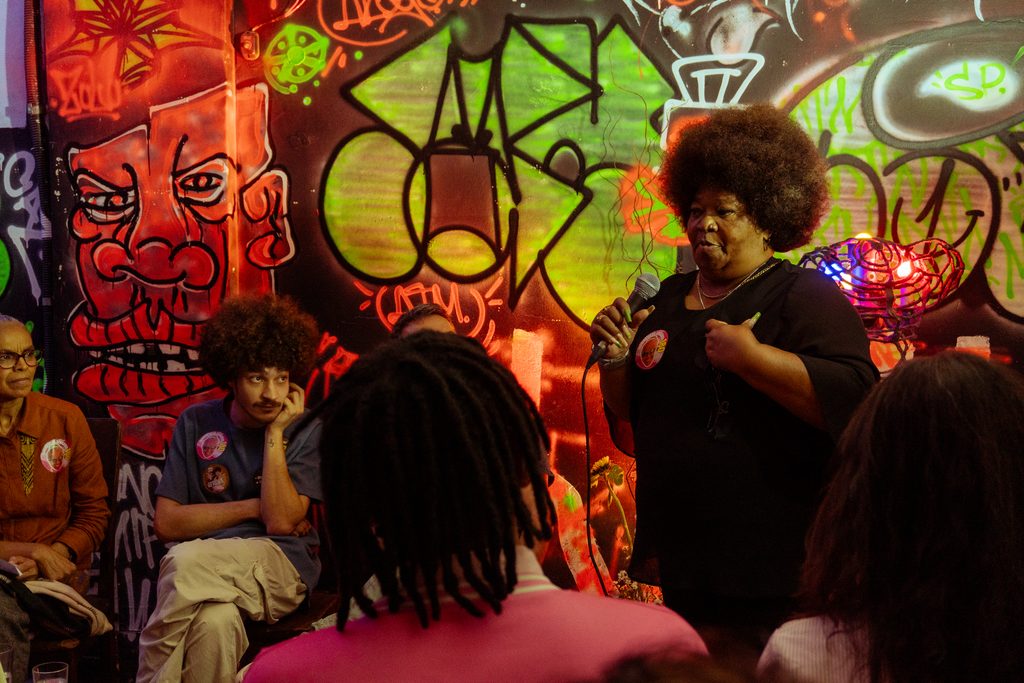
Laura also denounced the routine hostility and lack of empathy experienced by waste pickers on public roads, where drivers frequently show disregard for their carts and put workers’ lives at risk. She reminded the audience that society ought to recognise and respect the urban recycling service provided daily by these professionals, stressing that if efficient waste management existed at the source with proper sorting in every household, informal street collection would not be necessary.
In her critical assessment, she warned of the severe impacts of waste incineration, a simplistic measure that destroys resources and accelerates environmental degradation. From a social justice standpoint, she underscored the intersectional nature of the profession, noting that a large portion of the workforce consists of Black women and men, mothers and fathers, who secure their families’ livelihoods through this work.
Finally, she linked the lack of respect shown to waste pickers, the elderly, and children to a structural symptom of social breakdown. In response, she concluded with a call for voting awareness and popular organisation, advocating for unity around leaders genuinely committed to socio-environmental causes and the dignity of waste workers.
Tainá Salomão
Tainá Salomão (also known as Estrela Cadencia) brought to the debate a reflection on the role of the internet as a space of communication, opinion formation, and political struggle. In introducing her intervention, she shared a personal memory: at the age of 11, she saw Marina Silva’s face in a magazine for the first time. In the interview, Marina Silva reflected on biopiracy, a topic that, although Tainá did not yet fully grasp, planted a seed of curiosity and ancestral intelligence that would, years later, help guide her artistic and research trajectory.
Building on that memory, Tainá highlighted the importance of trusting the power of small moments capable of transforming perspectives, awakening consciousness, and influencing choices, including political ones. A piece of reading, a song, an image, or a social media post may seem like isolated gestures, but they hold the potential to spark reflections that resonate throughout a lifetime. In this sense, she argued that the internet must be recognised as a strategic territory for opinion-building, social mobilisation, and the dispute of narratives, one that needs to be reclaimed by artists, researchers, and communicators committed to social transformation.
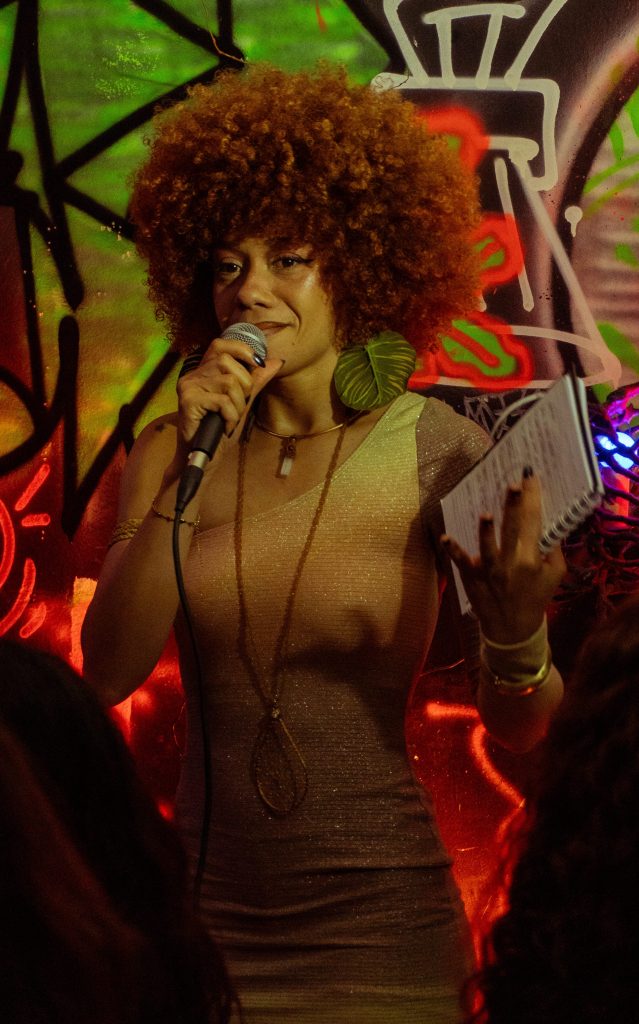
In her address, Tainá linked this reclamation to the valuation of individual skills and the creation of art grounded in genuine belief. As an example, she presented her song Sustenta a sua habilidade (“Sustain Your Skill”), whose chorus encourages people to acknowledge their talents and occupy spaces through a relation of loyalty to their own artistic expression. For her, non-commodified art can preserve its critical autonomy while still providing a source of income. The challenge lies in not allowing commercial logic to dictate entirely what is produced, what is communicated, and which ideas find room to circulate.
From this perspective, she called on people to turn their skills into tools for political expression. Those who paint can depict, through colour and imagery, the causes they believe in. Those who sing or write poetry can bring their compositions to social media. Every post can become an opportunity to present alternative worldviews and expand the reach of issues that often remain on the margins of mainstream media.
Tainá also mentioned the artist Bad Bunny and the international reach of his music as a benchmark for reflecting on the importance of documenting, sharing, and giving visibility to one’s own experiences. In this context, she encouraged the daily use of platforms such as WhatsApp and Instagram to communicate the changes one wishes to see in society; viewing images, videos, and words as instruments capable of building memory, mobilising communities, and provoking change.
Addressing the reach of online publications, she stressed that the work of emerging artists and communicators should not be devalued by low view counts. Even a post seen by just ten people can forge meaningful connections and organically reach those following that work. For this reason, she advocated for mutual support, content sharing, and the building of collaborative networks among artists, researchers, and communicators who are still carving out their space.
Finally, Tainá reinforced that the internet must become a less hostile territory for the left and for voices committed to social justice, democracy, and sustainability. In an environment dominated by disinformation and competing narratives, occupying this space requires presence, organization, creativity, and continuity. Her reflection concluded with a call to collective action: to sustain one’s skills, share what one believes in, and clear paths so that other voices can also be heard. Ultimately, if the internet is a space where opinions are formed, failing to occupy it means giving up active participation in shaping the ideas that influence society.
On the discussion
The discussions and accounts presented by civil society throughout the event reveal that the climate crisis can no longer be treated as an abstract or purely technical debate; it is a concrete reality that demands political action, science that is rigorous and participatory, and, above all, social justice.
Climate denialism and the rejection of science seeks to naturalise tragedies in order to exempt public authorities from their responsibilities regarding mitigation and adaptation. The interventions synthesised above sought to expose and dismantle these narratives that perpetuate municipal, state, and federal inaction.
The voices of those who experience these emergencies in their daily lives: from the youth in urban outskirts affected by floods and heatwaves in Guarulhos, to the daily struggle of waste pickers (catadores e catadoras), who ensure urban sustainability and street-level recycling under conditions of deep vulnerability and disrespect.
It is against this backdrop that the active presence of civil society consolidates itself as the fundamental engine of transformation. This is demonstrated by proposals such as the creation of a Municipal Observatory for Climate Vulnerability based on citizen science, alongside the call for respect and dignity for waste picking. It is social movements, peripheral researchers, and grassroots communities who hold the true diagnosis of and for the territory. Furthermore, the strategic occupation of digital networks by artists and communicators emerges as an indispensable pillar for contesting narratives, democratising information, and combating disinformation that serves economic and denialist interests.
The true power of this debate lies in civil society’s voices, the heart of a democracy. It is communicators who translate data into awareness; waste pickers who practice daily the ecological transition that the state overlooks; young people who propose innovative solutions through citizen science, and; artists who use their songs and digital channels to awaken minds and contest futures. No environmental policy will be just or lasting if it is built from the top down, behind closed doors in government offices. Real transformation requires making and holding space and devolving decision-making power and resources to those who feel the weight of inequality and extreme heat first-hand. Uniting our skills, occupying digital spaces, and organising popular participation are the definitive steps to turn indignation into political action and ensure that human dignity remains at the heart of every single decision made about our planet.