Mayane Bento Silva
To be cited as: Bento Silva, Mayane. 2026. “From OCA to CAMAMAZON: the trajectory of an early-career Amazonian researcher.” CAMAMAZON. Available at: https://camamazon.aber.ac.uk/2026/11/02/from-oca-to-camamazon-the-trajectory-of-an-early-career-amazonian-researcher/. Accessed xx/xx/xxxx.
My intention, in this post, is to describe a little about my research trajectory in the Amazon, and to reflect on my participation in the project Centering Climate Agreement-Making in and from the Amazon (CAMAMAZON). So as not to lose my way, I have tried to organize the meandering gait of my thinking in a chronological way. I believe that in order to speak of myself and to present what I research, I need to depart from my territory.
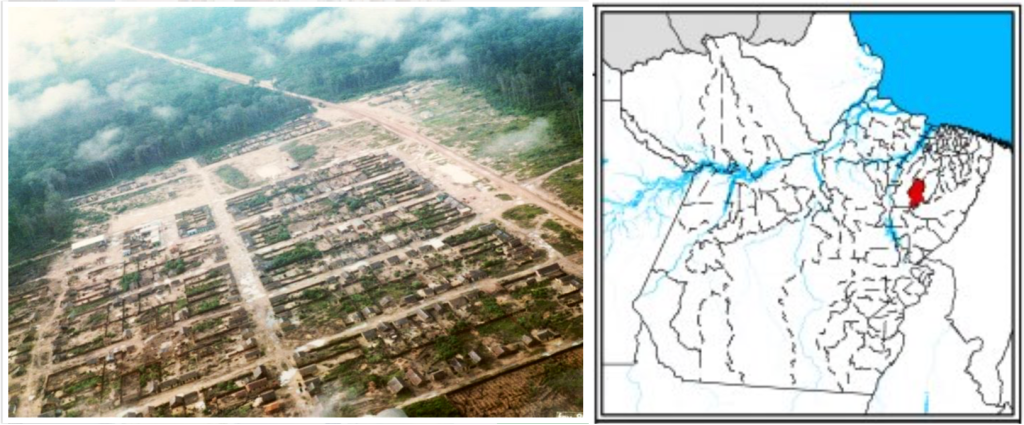
I am an internationalist professor who was born, grew up, and has lived in the Brazilian Amazon. I was born in 1988 in the municipality of Tailândia, a city whose economy emerged from the exploitation of timber along the margins of the PA-160 highway, in the state of Pará. My mother, Antonieta, came from Bahia, and my father, Francisco, came from Rio Grande do Norte; both arrived in the city in the 1980s, she still young, and he working as a truck driver. I am the third of ten children, and all of my basic education took place at the Centro Educacional Líder de Tailândia (Celta), on the border of northeastern Pará.
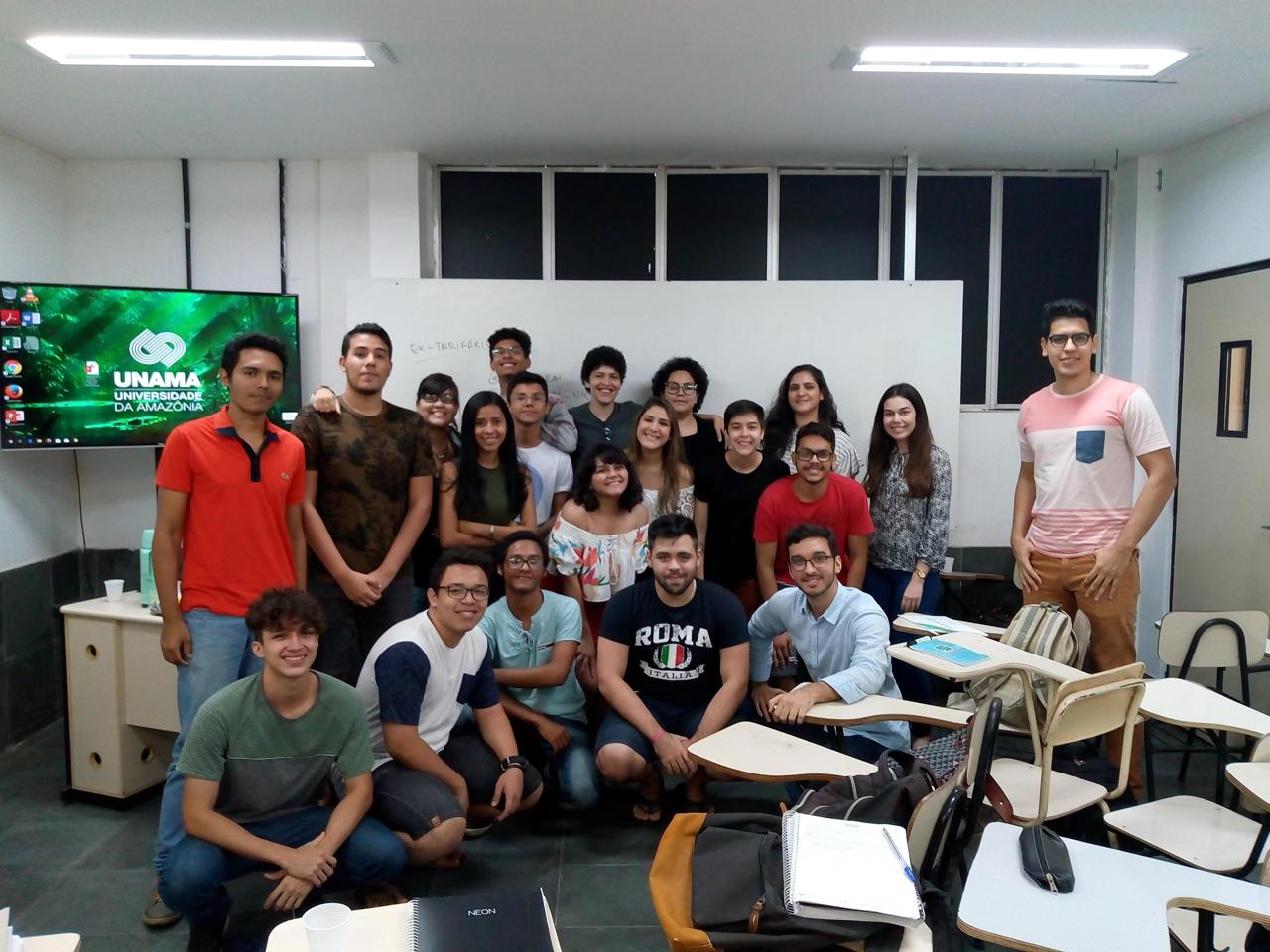
I moved to the city of Belém 20 years ago to study International Relations, and I began my undergraduate studies at the University of the Amazon (UNAMA) in 2006, at 17 years of age. The class in which I graduated, in 2009, was the first in the state. Perhaps for this reason, our training was shaped significantly by an economic perspective, although there was an effort to locate the study of International Relations (IR) within the context of Amazonian challenges. At that time, unfortunately, no public institution offered this undergraduate program in the region (Pará).
Throughout the undergraduate program, I held teaching-assistantship scholarships (bolsista de monitoria) in Brazilian foreign policy and comparative international politics. In my final year, under the guidance of Professor Dr. Mario Miguel Amin Herreros, I developed my final research project, engaging in a dialogue between Psychology (B. F. Skinner’s Behaviorism) and International Political Economy (neo-Marxist critical theories). I sought to understand how the behavior of states — Latin American states in particular — was conditioned by the interests of the United States, understood as the hegemonic power of the 1990s. Through that research, I concluded that deprivation, whether of resources, financing, freedom, or development, is a strategy of control historically used by the United States in its relations with Latin America.
In 2010, I entered the Graduate Program in Management of Natural Resources and Local Development in the Amazon, at the Environment Center (Núcleo de Meio Ambiente) at the Federal University of Pará (UFPA). In this interdisciplinary master’s program, I came into contact with a wide range of research on the Amazon. The class was composed of architects, engineers, educators, and law graduates, united by the challenge of thinking through the local development of the Amazon. Under the guidance of Professor Dr. Norbert Fenzl, I defended my dissertation, Regional Macroprojects and Their Consequences for Local Development: the IIRSA and Its Influence in the Case of the Belo Monte Hydroelectric Plant in Pará.
The dissertation described the connections between the initiative for the Integration of the Regional Infrastructure of South America (IIRSA), the interests of the Brazilian logistics state, and the construction of the Belo Monte Hydroelectric Plant, demonstrating that the socio-environmental costs of this development strategy – based on feeding the world market with the Amazon’s natural resources – outweighed any projected growth and economic return promised to the Amazon region at the time. At this stage of my academic life, it became increasingly clear to me that it was imperative to think beyond Euro-centered capitalist development.
In 2013, through a faculty selection process, I returned to the University of the Amazon (UNAMA) as a professor of Comparative International Politics. Over the 8 years I remained at the institution, I taught courses in political economy, security, and the geopolitics of the Amazon. I note that climate and climate change, as a research interest, presented themselves to me as something more abstract and transversal, one of the underlying reasons behind the fight against poverty, inequality, and environmental degradation that mark the history of International Relations in the Amazon. In any case, the exchanges with students and fellow professors throughout this teaching experience at UNAMA were fundamental to deepening my knowledge of IR as a discipline and of the complexities of the Amazon.
Still in 2015, I entered the doctoral program in International Relations at the University of Brasília (UNB), held in partnership with the Federal University of Pará (UFPA) as an inter-institutional doctorate (Dinter). The doctoral courses were taught in Belém, with the support of professors from the Institute of International Relations at UNB, such as Dr. Alcides Vaz, Dra. Ana Flávia Barros-Platiau, Dra. Cíntia Inoue, Dr. Roberto Menezes, Dr. Thiago Ghere, and Dr. Daniel Jatobá, to whom I will remain eternally grateful for their dedication to our education. In 2017, I spent 6 months in Brasília for a doctoral research placement in IR methodology and theory, and for the qualifying examination of my thesis project. Under the guidance of Professor Dr. Daniel Jatobá and the co-guidance of Professor Dr. Roberto Goulart Menezes, I defended my thesis, Colonialism and Coloniality in Brazil and in the Pará Amazon, in May 2019.
In looking back at this trajectory, I understand that, since my undergraduate studies, my research has moved from the macro level to the micro, passing through analysis of Latin America, then the Amazon, until deepening my reflections on the state of Pará. Since finishing my thesis, I have endeavoured to trace an inverse path, contributing to an Amazonian perspective of IR.
In this vein, climate change came to the center of my research agenda in 2024. Confirmation of Belém as the host city of COP30 presented itself as an opportunity to experience up close the process of constructing agreements in the field of IR. This mobilized IR professors and students in the Amazon, including myself, who for years had only studied environmental governance in books and at academic conferences. In that same year, I became a tenured professor at the State University of Pará (UEPA) and, with the support of Professor Miguel Dehnin, worked to bring the IR program at UEPA closer to that of the Federal University of Amapá (UNIFAP).
If I recall correctly, it was in January 2024 that we met at a coffee shop to discuss the development of a joint project. On that occasion, Professor Brenda de Castro (IR/UEPA) mentioned that, in her academic memorial, she had proposed an observatory that would allow us to follow and stay informed about COP30. We all liked the idea, and it was decided that we would build an extension program that would allow us to engage students from UEPA, UNAMA and UNIFAP, together with local civil society, around the production and communication of knowledge about the Amazon and the climate agenda. The idea took hold and materialized into a project that connected students from various regional teaching institutions with social movements and with national and international researchers.
I can say that the COP Observatory in the Amazon (OCA) is the fruit of the enthusiastic encounter between recently tenured professors. We had no experience in any COP, we had no experience in the institutionalization of extension projects, and we had no money. We had only an awareness of the opportunity and of the necessity of carrying out the task, together with the students, of understanding and disseminating information about climate change, global environmental governance, and more specifically, about the Amazon at COP30.
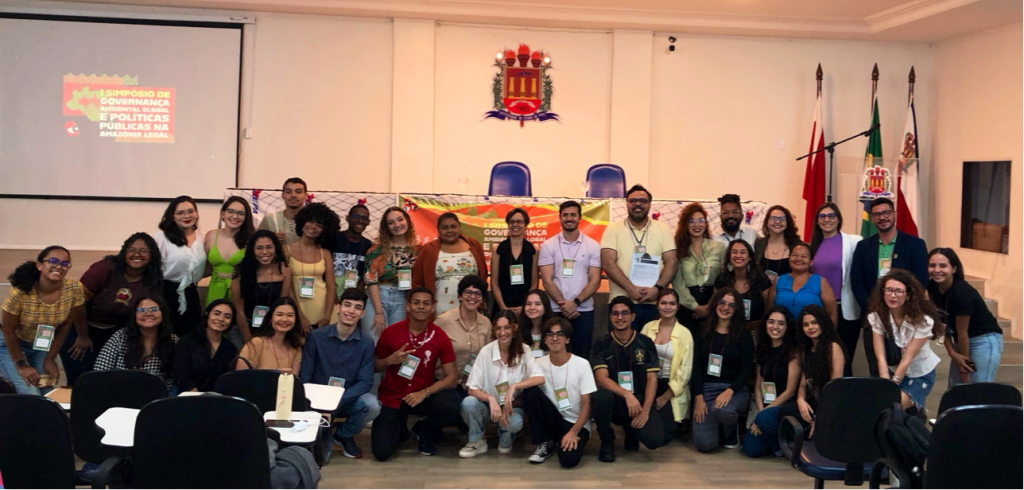
To that end, since 2024 OCA has been organized into four axes of action: (i) the dissemination of information about the Amazon, climate, and environment via social media (MIDOCA); (ii) workshops and meetings of the Research Group on Environmental Governance, Public Policy, and the Amazonian Conjuncture (GRUPOCA); (iii) the Symposia on Global Environmental Governance and Public Policy in the Legal Amazon (SIMPOCA); and (iv) the publication, three times a year, of the OCA Newsletter (INFOCA), presenting the results of local research on environmental and climate governance.
For COP30, in 2025, OCA student members engaged on several fronts: some acted as UNFCCC volunteers, as members of Civil Society Organization (CSO) delegations, mobilizing protests and coordinating side events, among other activities, while others showed little interest in the event or its impact on the city, on their research, and on the field. This diversity of engagement — or lack of it — proved to be a rich experience, one that has pushed me to understand the role of Amazonian youth, with and from their own perspective, in climate governance.
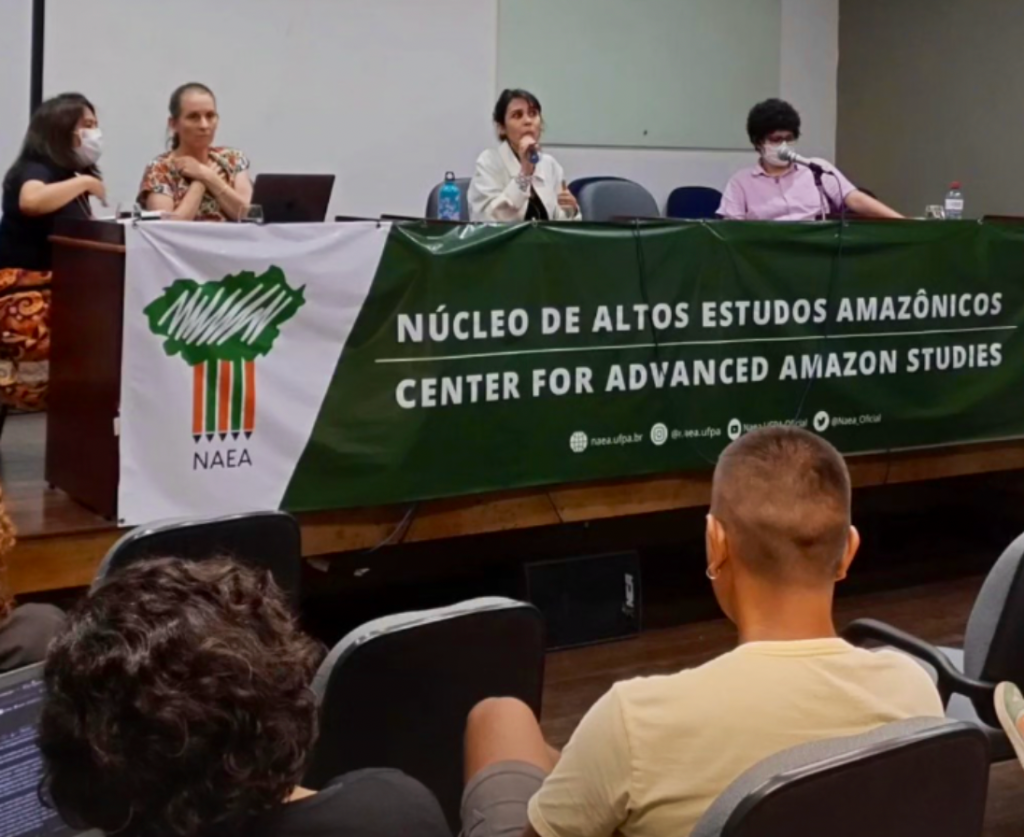
The opportunity to put this research into practice arose in 2025, when Professors Verônica Korber Gonçalves and Cristina Inoue accepted me as a postdoctoral fellow at the Institute of International Relations (IREL/UNB), bringing me into the CAMAMAZON project and, with it, into the mission of investigating how the Amazon constitutes a relational point of departure for rethinking global climate governance and the study of IR. It is within this mission that my project, Youth, Extension, and Climate, is inscribed. Its aim is to understand, through the experiences and memories of OCA’s IR students, what it means to study the discipline in and from the Amazon, and what it has meant to experience a COP in the heart of the forest. I have endeavoured to understand how this lived experience constitutes, or may come to constitute, particular modes of political engagement in climate governance for the observatory’s young volunteers, modes capable of centering the role of the Amazon and of giving new meaning to IR as a discipline practiced in and from the region.
In practice, situating this research in the Amazon means treating it not as an empirical case, but as a place of enunciation. If we extend to Amazonian youth the epistemic opacity that Eduardo Viveiros de Castro denounces in his preface to A Queda do Céu (Viveiros de Castro, 2015), I would suggest that we likewise do not know what young people know. Just as Indigenous cosmologies have been historicized as ancient knowledge belonging to the past, young people are catapulted into the condition of agents of the future, and in both cases, full presence in the now is denied them.
Against this double temporal subtraction, I draw from Viveiros de Castro the importance of recognizing the contemporaneity of worlds and their multiple territorialities. From this starting point, I see COP30 in the Amazon as an amalgam of worlds and of diverse, competing rationalities. COP30 matters to my research precisely because it offers an opportunity to understand the displacements experienced by young IR students from the Amazon as they move between the classroom, the territory, and the global climate negotiations, and, as far as possible, to understand how this transiting-from-the-Amazon constitutes them as agents in the production and contestation of meaning, in the world and between worlds.
In 2025, I believed that contributing to the CAMAMAZON book project would be the overarching objective of my participation. It is, but what has in fact impacted me most in this process is the way of doing it. From my undergraduate studies to my doctorate, the process of doing research was always a very solitary one. Now, embedded in a research process supported by a network of women researchers, and with Matthaeus as our research assistant, this experience has been transformed in a positive way: I no longer feel alone in this journey.
This has also opened up the possibility of developing the OCA project differently with students, imagining and practicing another way of doing science: together, with and through one another. Far from being merely romantic, however, these transformations in the relations of knowledge production can also be unsettling. The sentipensar (feeling-thinking) that guides this research, for example, frightens me a little. Seeing myself in the writing, analyzing my interactions with students, revisiting memories, and confronting all the emotion this carries has been both transformative and frightening, because, to me, it sounds like life telling me: enough of merely criticizing subalternization; let us do something about it. So as not to sink into climate and academic anxiety, I like to believe that this something can begin by collaborating so that the knowledge of OCA’s young members can speak, and be heard, about the discipline of IR and about global climate governance from the Amazon.
Thinking ahead to COP31, as I mentioned, none of the coordinating professors of OCA had ever participated in a COP. COP30 was my first time. I only managed to move through the Blue Zone thanks to the dedication of Professor Hannah Hughes, and I confess that the experience disoriented more than it clarified. Faced with the simultaneous volume of meetings, negotiations, and parallel events, two questions would not let go of me: what should I do here? And how do I assimilate everything that I observe? Then there was the tiredness, physical and analytical, of trying to apprehend a complex phenomenon while seeing it for the first time, and at the same time, coordinating the OCA project, with the central objective of facilitating this understanding and involvement for its student members.
I do not know how many COPs it is necessary to follow in order to understand the process and our role in this space. This must be subjective, especially if we consider the series of logistical, economic, and environmental factors involved in being physically present at a COP, as well as the possibilities of following many activities online. In any case, in the context of my investigation, following COP31 will be important to deepen my observation and knowledge about the action of youth in climate governance, as well as to analyze the continuity or discontinuity of OCA members’ engagement, through, for example, their presence and observation at the conference, their contribution to the newsletter, and discussions in the research group. Until then, you can learn more and follow OCA’s activities at observatoriodacop.com.br.
Reference
KOPENAWA, Davi; ALBERT, Bruce. A Queda do Céu: Palavras de um Xamã Yanomami. Translated by Beatriz Perrone-Moisés. Preface O recado da mata by Eduardo Viveiros de Castro, p. 11–41. São Paulo: Companhia das Letras, 2015.