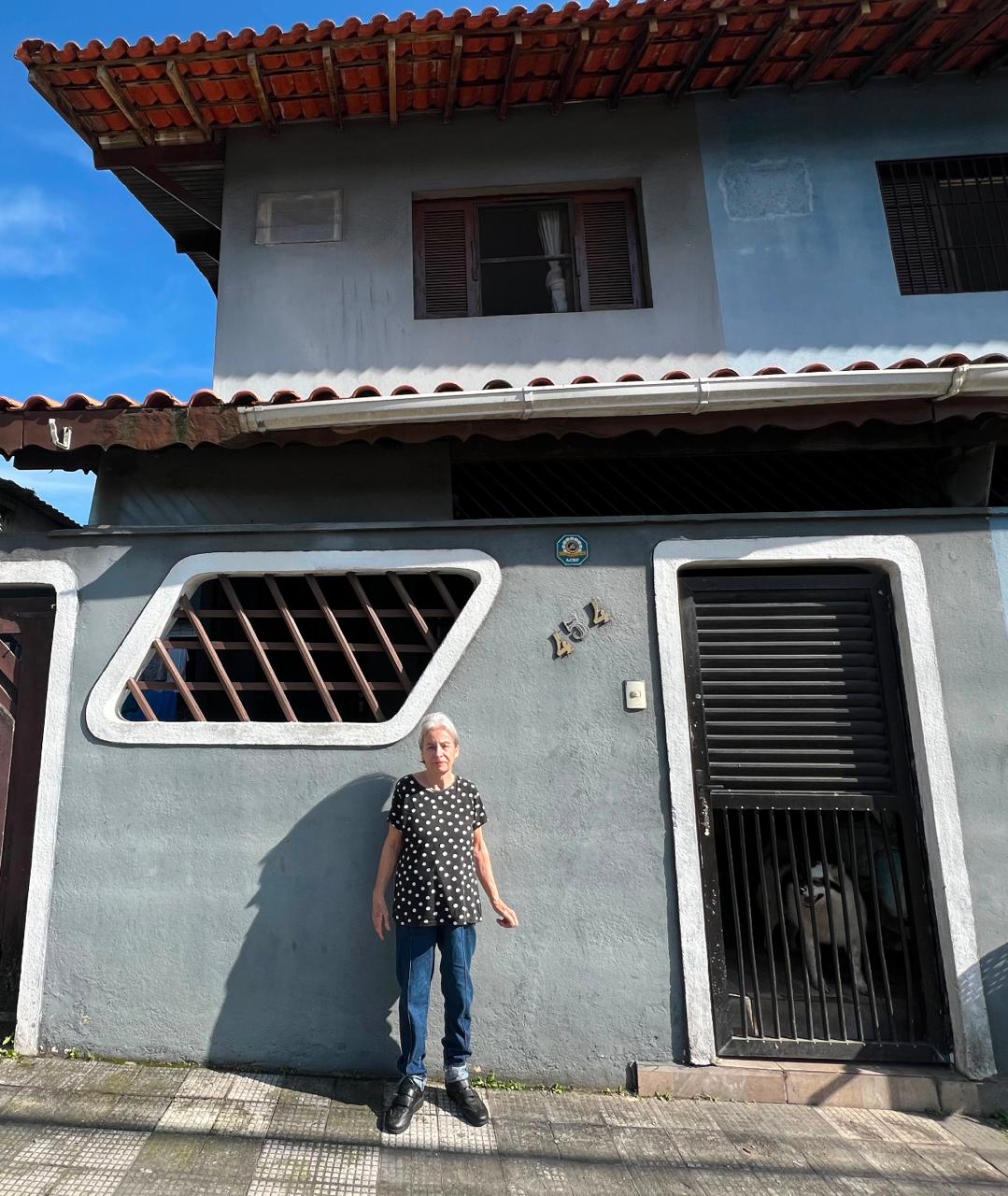
The house that my grandmother has lived in for the past 30 years.
To be cited as: Menezes Assef, Matthaeus. 2026. “My Grandmother’s Territorial Memories as a Caiçara on the transformation of Guarujá” CAMAMAZON. Available at: https://camamazon.aber.ac.uk/2026/07/01/my-grandmothers-territorial-memories-as-a-caicara-on-the-transformation-of-guaruja/ (accessed: xx/xx/xxxx).
This blog is the first in a series of three texts that addresses territorial transformations in and of Guarujá, in the state of São Paulo. The writing of this blog was inspired by the conversation on territories between members of the CAMAMAZON project team. These reflections and analyses brought up questions around my territorial relations, which initiated the development and research of this content.
I was born on an island on the coast of São Paulo called Guarujá (which means “place of frogs” as named by the Tupis Indigenous people), and known as the “Pearl of the Atlantic” because of its beauty. My family descends from the traditional peoples of the region, the Caiçaras (traditional fishers from the coast of Brazil), who are fishing communities that carry a heritage formed through a mixture of Indigenous and European cultures. In the case of my family, this identity was shaped specifically by the encounter between French settlers and the Indigenous peoples of the Brazilian coast. Beyond the dynamics of Guarujá itself, our family was spread across other parts of the coast of São Paulo state: my grandmother had uncles in São Sebastião and in Ilhabela (see map).
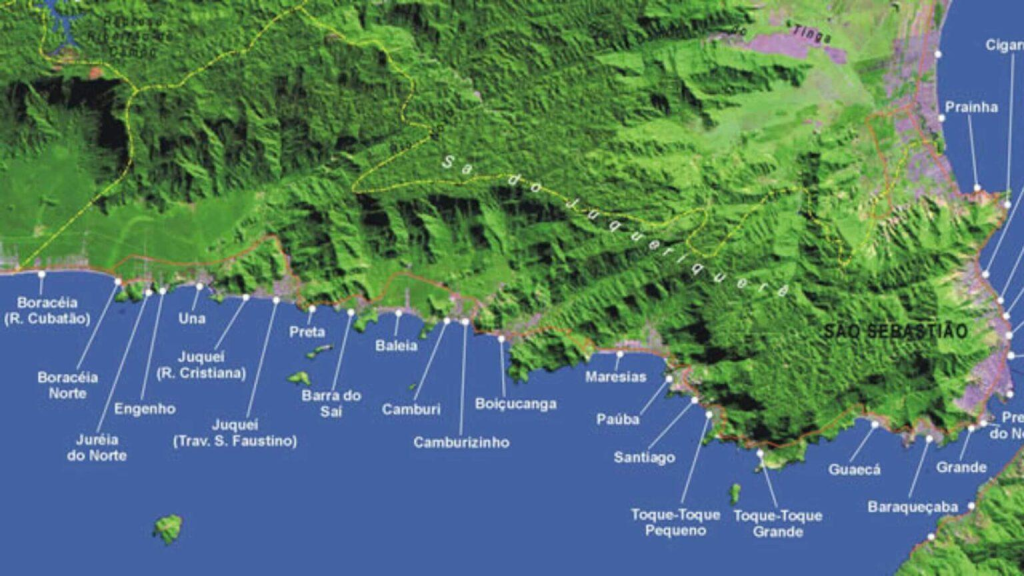
My grandmother’s own story began in an unusual way. For her mother to reach Santos, where the nearest hospital was located, she had to travel by river and sea, and my grandmother was born on a boat on the way to the hospital, between Santos and Guarujá. Until the age of ten, my grandmother grew up in Maresias. There, my great-grandfather had a house in Barra do Caí and grew cocoa to sell. My grandmother also told me that he had cassava plants, orange trees, and other food crops, as well as tobacco plantations, which they cultivated to sell in towns and on the streets. To visit relatives, they travelled by canoe or boat. When he decided to leave that house, my grandmother’s aunt remained there continuing the cultivation.
When I asked my grandmother about her relationship with nature, she told me that she walked barefoot and swam in the river with otters, although she was afraid of them:
Eu ia para a escola a pé, eu e minhas irmãs, e quando voltávamos da escola de tarde a gente passava folha de eucalipto com uma pasta no corpo para tomar banho e dava um mergulho no rio, e vinham as lontras e ficavam nadando do lado da gente. Eu tinha medo, mas muitas vezes elas nadavam perto da gente ou ficavam na pedra observando a gente tomar banho. Sinto saudades desse rio, em Marisias, ele se encontrava com o mar; era muito bonito. Hoje em dia esse rio não existe mais.
I used to walk to school with my sisters, and when we came back from school in the afternoon, we would rub eucalyptus leaves mixed with a paste on our bodies before bathing in the river and then take a bath in the river. Otters would come and swim beside us. I was afraid, but often they would swim close to us or stay on rocks watching us bathe. I miss this river. In that river, in Marisias, it met the sea; it was very beautiful. Nowadays, that river no longer exists.
She always lived close with nature. It was during this period that my grandmother moved to Iporanga, in Guarujá, to live with her grandparents, who lived facing the beach. They were fishing people. There was a community there. Unlike in Maresias, they did not have plantations, and they depended entirely on hunting and fishing. Living in Iporanga, she told me she used to walk 23 kilometres to go to school in the centre of Guarujá.
My grandmother’s grandfather was a fisherman and used to go out into the open sea, often together with her father, returning hours later with whatever they had managed to catch. Because they caught a large amount of fish and needed the food to last for a long time, they placed the fish in a smoker built directly into the ground. Their food routine, however, was dictated by scarcity. My grandmother says that she did not like when her father returned from fishing, bringing turtles to eat. She said that her father would argue with her to make her eat it because, many times, that was all they had to eat. In moments when the sea did not provide enough, he had to go into the forest to hunt, and the family ate mammals, and there were wolves (Lobo Guará) there for them to eat.
My grandmother’s mother used to harvest cassava, grate it, and stir the mixture for a long time; this produced a liquid, and from the remaining residue she made both biju and cassava flour. To obtain basic supplies that they could not produce themselves, such as beans, my grandmother would get into a canoe and row to Praia do PC, from where she would continue on to the town to buy food.
My grandmother learned from her own grandmother how to catch giant river prawns. They would place food scraps in the water and, when the prawns approached to eat, they would throw nets to capture them. My grandmother loved eating prawns freshly caught from the water, as she describes:
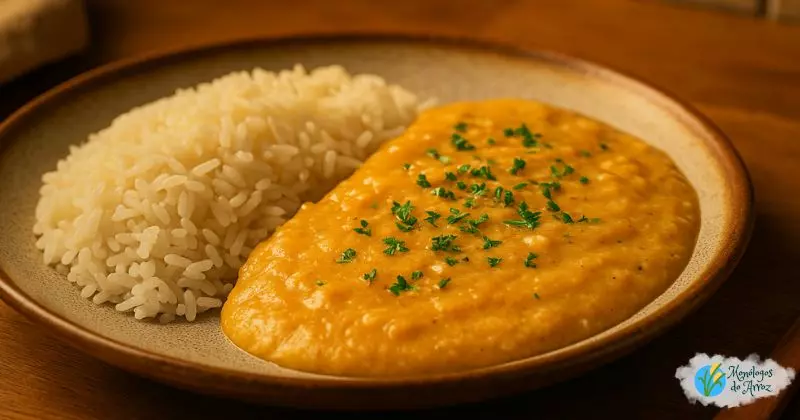
Tinha um puçá (saco) feito como uma rede e presa em uma madeira, minha avó jogava no rio com um pedaço de comida, as vezes eram pedaços de peixe e deixava parado. O camarão do rio se chama Pitu; eles eram enormes, como uma lagosta. Quando eles entravam, a gente pegava do rio e colocava em uma cesta de palha. Depois disso, minha avó assava no fogo ou colocava em uma chapa em um fogão a lenha. Depois que assava, ela tirava as cascas e temperava com sal e limão e comia com o que tinha, às vezes com arroz e feijão ou com os peixes que o pai e o meu avô pescavam no mar. Meu pai cozinhava na folha da bananeira os peixes, e ele fazia pirão de banana verde. Minha avó cozinhava a banana com a água do peixe, amassava e colocava farinha e mexia com coentro e ficava muito bom.
There was a net-like bag – puçá – attached to a piece of wood. My grandmother would throw it into the river with a piece of food, sometimes pieces of fish, and leave it there. The river shrimp are called pitu, and they were enormous, like lobsters. When they came into the water, we would take them from the river and put them in a straw basket. After that, my grandmother would roast them over the fire or put them on a griddle over a wood fire. After roasting, she would remove the shells, season with salt and lemon, and eat them with whatever she had – sometimes with rice and beans or with the fish that my father and grandfather caught in the sea. My father cooked the fish in banana leaves, and he made pirão (a type of porridge made with cassava flour) from green bananas. My grandmother cooked the banana with the water from the fish, kneaded it, added flour, and mixed it with coriander, and it was very good.
The community’s water system also came directly from local sources: they used very wide bamboo poles positioned at the source of the river and waterfalls to direct the flow of water, which then fell into a large iron or stone cauldron (my grandmother does not remember exactly which material it was made from). It was from this water that everyone drank, bathed, and washed their clothes.
My grandmother told me that, besides being a great fisherman, hunter, and farmer, her father was also a great builder and travelled to help people construct houses in several places along the coast. She always told me that, in Iporanga, my great-grandfather helped build roads alongside his father (my great-great-grandfather). She proudly tells me, “Meu pai e meu avô construíram a estrada do Sítio de São Pedro/Iporanga” (My father and my grandfather built the road of Sítio de São Pedro/Iporanga).
With the major expansion of the state of São Paulo, and the arrival of many immigrants from Europe and Asia through the port of Santos, as well as migrants from different regions of Brazil (as I explore in the next blog), there was an intense movement of people searching for better living conditions and new opportunities in the state of São Paulo. Many took up residence in different regions of the state, including the coastal city where I was born, profoundly transforming the territory and the local way of life.
With this urban growth, construction companies arrived in my great-great-grandparents’ community, promising development and improvements. My grandmother describes how many within the community, including her own family, lost their homes:
Pessoas vestidas de terno e gravata iam até os moradores levando papéis e prometendo uma vida melhor, falando que iriam dar oportunidades. Muita gente que meu pai ajudou perdeu as casas e as terras para grandes empresas.
People dressed in suits and ties went to the residents carrying papers and promising a better life, saying they would provide opportunities. Many people, whom my father helped to build they homes, lost their houses and lands to large companies.
Promising these wonderful things, the men in suits collected fingerprints, asking people to “colocarem o dedo” (put their finger). They used these documents to profit from people’s dreams.
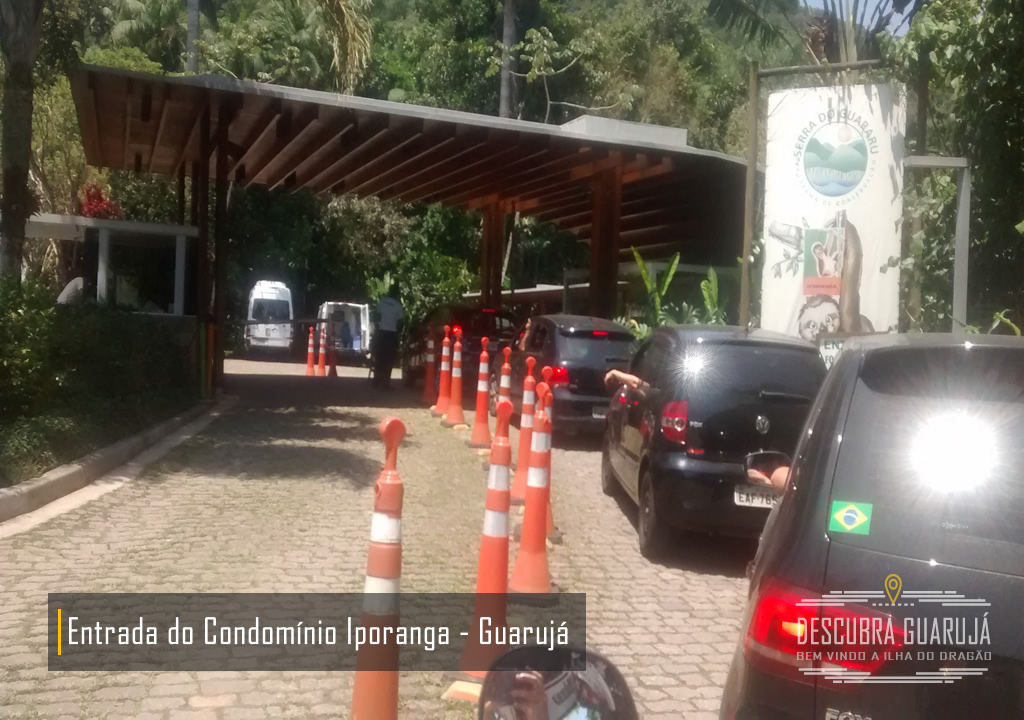
Today, Sítio de São Pedro/Iporanga, which was once a place of fishing people, has been transformed into an area of high-standard private homes known as Iporanga, where many millionaires and billionaires own summer houses. The beach has become restricted and private; access to this territory is now controlled, and the surroundings are blocked by security gates, walls, and guards. A place that was once free now requires permission to enter (to show the ID the car’s plate number).
In the image, take from Google Maps, the sign on the gate reads “identify yourself”
Meanwhile, the rest of Guarujá grew rapidly and in a disorderly way, attracting many people without adequate infrastructure. Many fishing families were pushed into other regions further away from the beach. What happened to my grandmother’s family also happened to many other families, and stories like these are still common in Brazil. With the little money they received from the construction companies, my grandmother’s father managed to rebuild a house in a peripheral area of Guarujá called Vicente de Carvalho. Many other fishermen and communities were displaced, and this displacement resulted in serious sanitation and urbanisation problems that still deeply affect the region and the lives of the local population.
Today, at 78 years old, my grandmother still lives in Guarujá. She moved to a place in an area that was once covered by mangroves, because of that, sometimes the house shakes when a bus or a lorry passes by, and the water covers the road because the canal that was built cannot hold the water when heavy rain comes. All her territory has changed. During her lifetime, she has witnessed rivers disappear, forests give way to roads and houses, and fishing territories become private property. Her memories reveal how territorial transformations are not only changes in the landscape but also changes in the lives, livelihoods, and futures of the people who belong to these places. Her story offers a glimpse into the profound transformations that have shaped Guarujá and serves as a starting point for understanding the broader processes of territorial change that I will explore in my other blogs.
This blog is part of a conversation between CAMAMAZON project members on our relationship to the territories of a multi-territorial ethnography. For more in the series, see: Territories.