To be cited as: Maso, Tchella. 2026. “Between bodies, territories and the international: Introducing myself to the CAMAMAZON Project.” CAMAMAZON. Available at: https://camamazon.aber.ac.uk/2026/09/30/between-bodies-territories-and-the-international-introducing-myself-to-the-camamazon-project/. Acessed (xx/xx/xxxx).
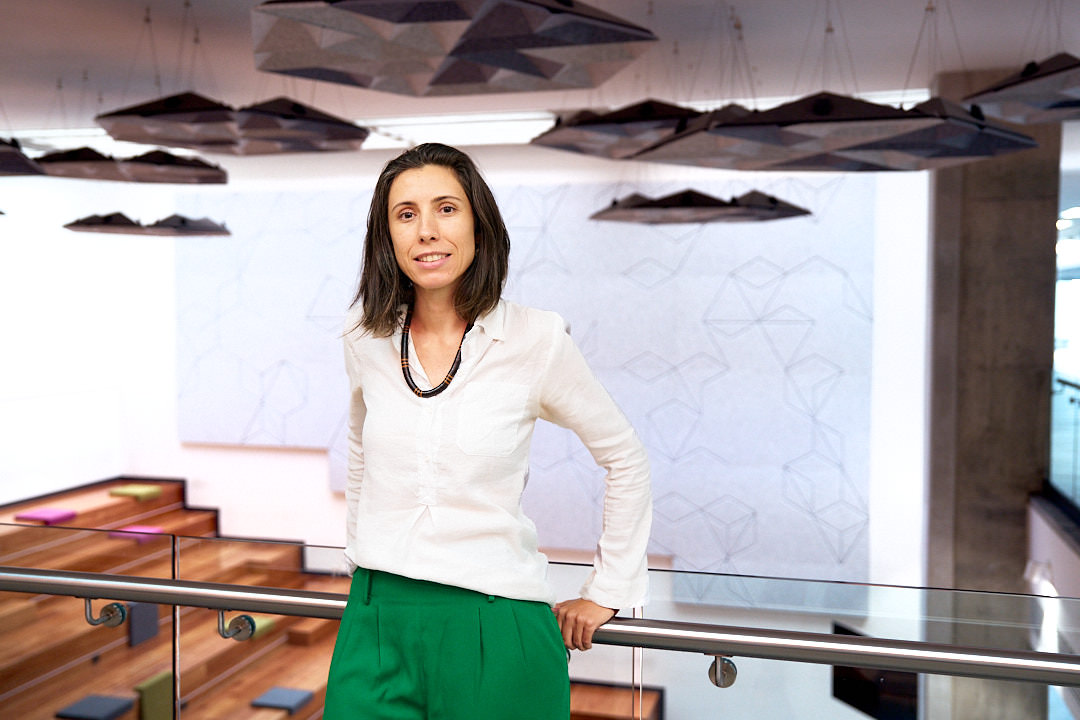
My name is Tchella Maso. I am a professor and researcher in International Relations at the University of Brasília (UnB). I also maintain my affiliation with the Federal University of Roraima (UFRR), which is in the northern most state of Brazil. My research brings together feminism, Indigenous peoples, gender, sexualities, and global politics, with a particular focus on Indigenous women and sexual and gender dissidences.
My interest in climate politics emerges from this broader trajectory. Drawing on feminist anthropology, I am interested in how the international is experienced through bodies, territories, everyday life, and different ways of feeling and inhabiting the world (un mundo donde quepan muchos mundos, as the Zapatista cosmofuturism reminds us). I seek to work across scales, connecting everyday experiences, territories, and the international processes that shape them.
My relationship with the Amazon is also personal. I lived in Boa Vista, Roraima, for two years through my affiliation with UFRR, a fascinating experience, both personally and academically, that deepened my desire to engage with Amazonian worlds, their conflicts, and their possible futures. This desire was not born in Roraima alone. It echoes an earlier one, forged when I spent time in Dourados and encountered the harsh realities faced by the Guarani and Kaiowá peoples, living under the constant threat of agribusiness expansion and the violence it brings. It echoes, too, my time in Foz do Iguaçu, at the Federal University of Latin American Integration (UNILA), which is situated at the border between Brazil, Argentina and Paraguay and where I fell in love with our continent. Together, these experiences produced in me a desire for the borderlands — la frontera — in the sense given to us by Gloria Anzaldúa (1987): not simply a line of division, but a space of tension, encounter, and possibility, where new ways of thinking and being are forged.
Through the CAMAMAZON project, I want to explore how Indigenous women and sexual and gender dissidences mobilise the Amazon in climate politics, particularly around COP30 and COP31. I am interested in the Amazon as an ontological and relational one. My research focuses especially on the work of ANMIGA and the Tybyra Collective, and on the ways their political practices challenge dominant understandings of climate governance.
This work is also connected to my involvement with the Arandu Network and the Caleidoscópio National Institute of Science and Technology, where I have developed feminist and queer research with Indigenous peoples and other historically marginalised subjects. These experiences have taught me to be attentive to the possibilities of imagining other futures while resisting easy solutions and new forms of colonisation.
For me, researching climate politics means not only asking what happens in international negotiation spaces, but also what happens when those negotiations meet territories, bodies, memories, and everyday lives. Understanding how climate change is felt and lived across different worlds interests me deeply — as does translation itself, always in search of alternatives.
Perhaps, ultimately, my research is about learning to stay with the problem, as Donna Haraway (2016) puts it: to be curious, to pay attention to unusual paths, to make an effort of imagination, contemplation, and connection — to resist the temptation of simple answers and to remain attentive to the worlds, relations, and futures that are still being imagined.
References
Anzaldúa, Gloria. 1987. Borderlands: The New Mestiza =La Frontera. San Francisco: Aunt Lute books.
Haraway, Donna J. 2016. Staying with the Trouble: Making Kin in the Chthulucene. Duke University Press. doi:10.1215/9780822373780.