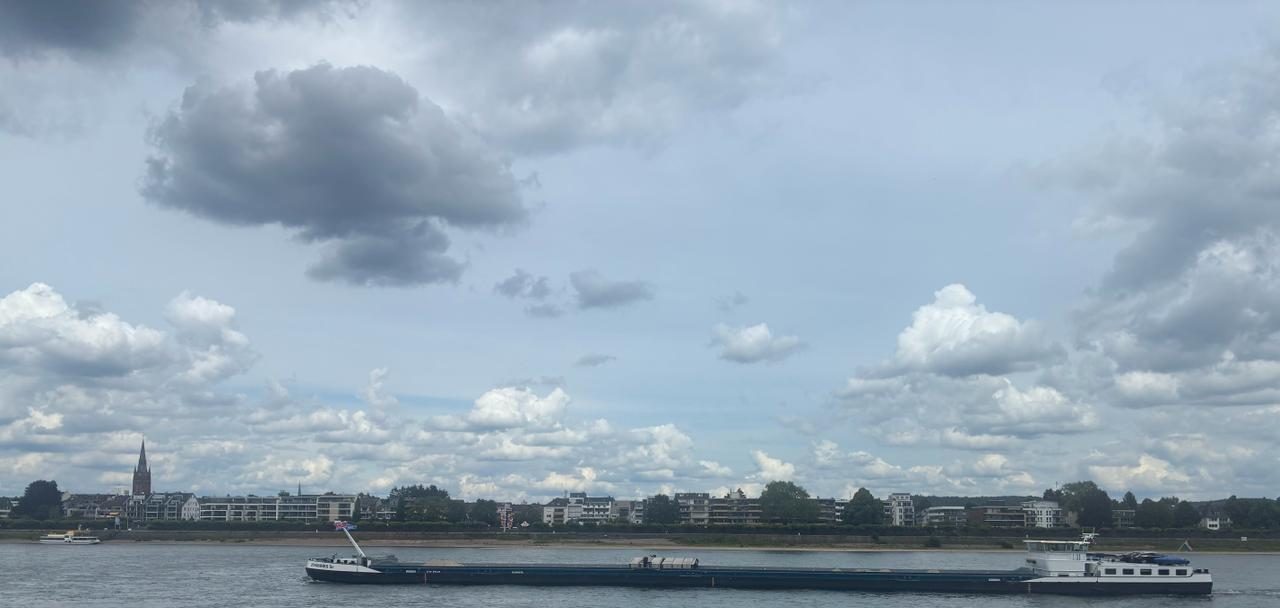
Ship on the Rhine in Bonn.
To be cited as: Gonçalves, Verônica Klober. 2026. “The territory of Bonn” CAMAMAZON . Available at: https://camamazon.aber.ac.uk/2026/09/24/the-territory-of-bonn/. Acessed (xx/xx/xxxx).
It’s my second time at the June Climate Meetings in Bonn, otherwise known as SB64. It is much quieter and easier than COPs – fewer things happening, fewer people, a smaller venue. I heard from other people, and I agree, it’s easier to get a sense of the climate negotiations here – the procedures, the dynamics, etc.
I arrived on Wednesday June 10th to follow the Just Transition Work Programme (JTWP) – the meeting for this agenda item took place every day, for around 2 hours, which left me free time to go to meetings on other topics. I chose to go to presidency events, for example, the Roadmap on Transition Away from Fossil Fuels, and the COP30 Presidency open dialogue with parties and NGO constituencies. Among the negotiation items on the agenda, I chose to go to SBI 16 Arrangements for Intergovernmental Meetings (Contact group). It’s like going to the kitchen of the COPs – where they discuss the size of the events (how many badges and which type of badges), the budget, ethical rules, etc. Which is, I realize now, already a question of participation and representation.
The territory of Bonn – It is a Schengen Area!
It is not easy for most people to participate in this meeting. There is the badge issue (I already wrote about that) and the funding for travel and subsistence. And then, even if you have all that, it is a Schengen Area! You need a visa. The Schengen Area shapes Bonn’s territory, deciding in advance who gets to be in the room.
I watched an event, Press Club Brussels Europe: “No Visa, No Voice: Diplomatic Barriers to Climate Representation.” They reported, again, the same issue they’ve raised before: the cost of travel is high, most need international funding, and there’s still the uncertainty of the visa — expensive, requiring proof of income, letters of recommendation — and still, sometimes, they don’t get it. One Indian researcher, with relevant publications in the field, had planned to take part in that very event and couldn’t get in. They mentioned a campaign, “Bonn Baby Bonn” that wants to make Bonn more accessible, so more people can participate.
I agree so much with what they are saying, as it reveals the structural limits of participation. But does it make sense to want more and more people? The institutional design doesn’t hold it, and it panics those who have long occupied this space. At the same time, something makes me think that without these other worlds at the COP, the paragraph on fossil fuels would never have entered the Global Stocktake (GST).
More about the territory of Bonn: It is beautiful
Bonn reminds me of the discourse of sustainability. It’s a very clean, organized city. I took photos of the ships. The river — they use it for navigation. Coal, sand ships. Also tourism ships.
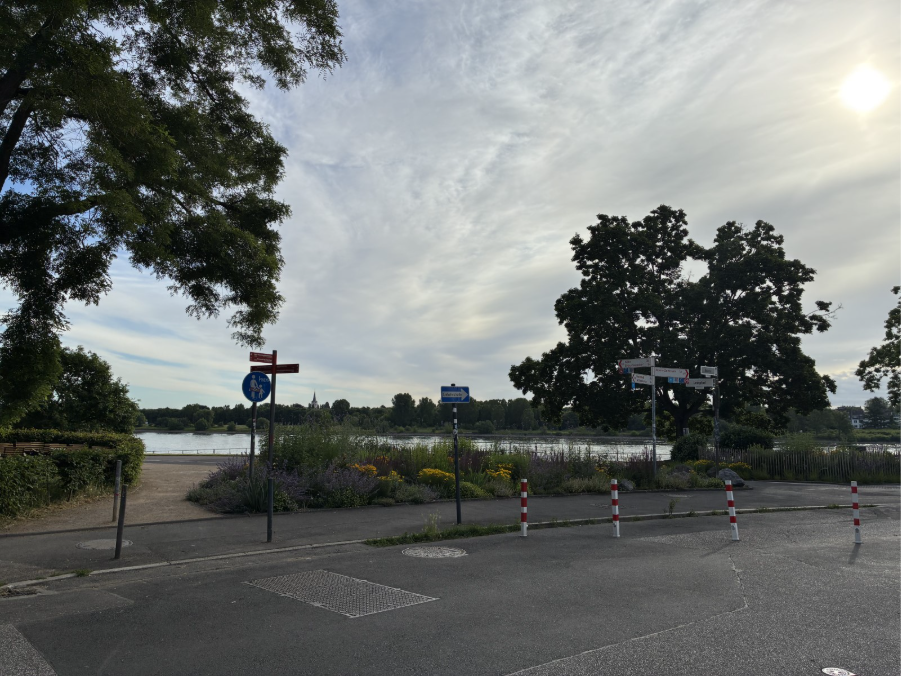
Why can’t we have that in Brazil? We do, but only in elite bubbles — bike lanes (like the ones that were built in Belém for COP30), unbroken sidewalks, and trees. Is Bonn also an elite bubble?
In Amazônia, earlier this year, Auricélia Arapiun — a leading voice of the Indigenous peoples of the Baixo Tapajós — had been part of a month-long occupation of Cargill’s river terminal in Santarém, Amazônia. They were protesting a federal decree that opened three Amazonian rivers, including the Tapajós, to waterway privatization and dredging meant to ease the passage of large cargo vessels. The occupation, involving fourteen Indigenous peoples, ended when the government revoked the decree.
Some time after that, I talked to someone who was really upset about the outcome – like we had lost this huge opportunity for development. Is that what the Amazon needs, she asked? No, it’s not! I would reply. Here, I am with the post-developmentalists. But then, can Bonn have this? Or should they change as much as we have to change? Are they willing to change that much? And change into what?
So what my eyes see in Bonn is not sustainability? Difficult to convince Brazil’s elites of that.
Still on Participation
A constant question when I am at one of these events is, what is the meaning of this? Multilateralism is important and limited — the scholarly literature on this is extensive. What intrigues me are the tensions around the limits of the state-centric perspective, and the alternatives to it, which are not necessarily more representative or democratic. Would a bigger COP be more plural? Would a different arrangement – like plurilateralism – be more fair in its outcomes?
And what is the purpose of me being here? An expensive, long trip. I leave my family. I use resources that could go elsewhere. I don’t represent anyone here.
This question of representation, of participation, troubles me a lot. Maybe I need to set a conscious purpose to give back, in practical terms, some of what I learn here — not only in the classroom, in supervising students, but more broadly. But without reinforcing the idea that everyone should be here. Shouldn’t we? It is such an unequal space.
What is the best scenario for participation? As many countries as possible? As many people as possible? As many civil society representatives as possible — and how are those representatives chosen?
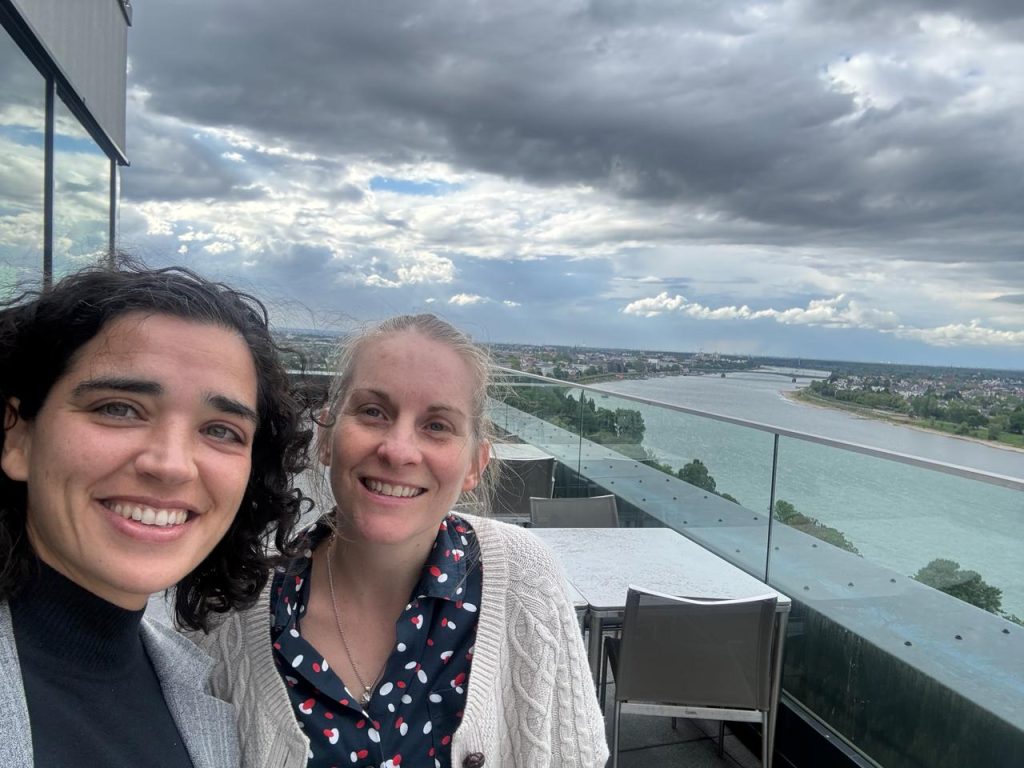
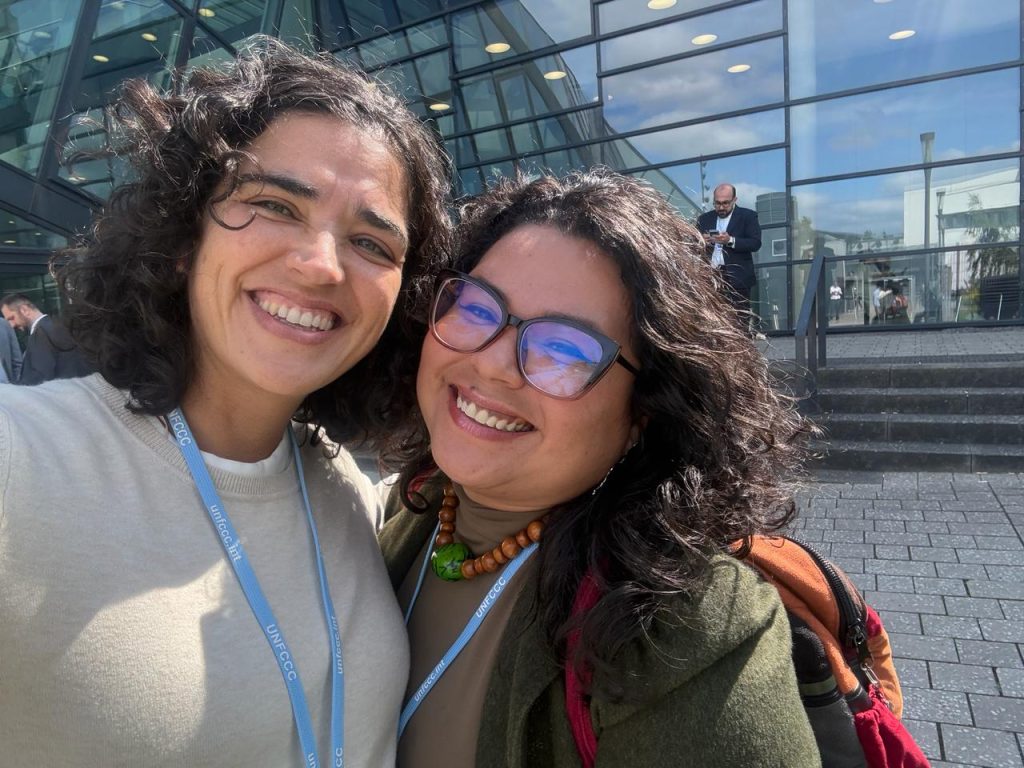
But at the same time, I want to believe that more is better than fewer. I’m not a structuralist, not even a “hard” institutionalist — I don’t think people stop mattering just because the logic of state interests, or of the international political-economic order, tends to prevail. Negotiators are people too: influenced, inspired, capable of pride, of fear. It isn’t in vain.
But then who should participate, and how are they chosen? That’s a question of political organization, of power — which is exactly why it matters so much for social movements and civil society to organize and dispute who gets to be in the room. Maybe one day COPs will be too small for so many voices, but then that’s a good problem, I guess — because it would mean more people investing their energy in trying to change how climate agreements get made.
PS. No one from Kuntari Katu was in Bonn, or at least I didn’t come across anyone. Kuntari Katu was a program set up by Brazil’s Ministry of Indigenous Peoples and Ministry of Foreign Affairs to strengthen the technical and political capacity of Indigenous leaders to influence international climate negotiations, with COP30 in view. It brought together 30 Indigenous leaders from across Brazil’s biomes. Some of them were already in Bonn last year, and I followed the group tracking the Just Transition Work Programme closely (Tchella Maso, Alessandra Prates and I wrote about it here). Most of them went on to COP30, where they were everywhere: at events, in the corridors, talking to negotiators. They were part of what the COP30 Presidency celebrated as an unprecedented Indigenous presence, with around 900 people accredited to the Blue Zone (360 from Brazil), the largest in three decades of COPs .
And yet, six months later at SB64, I couldn’t find any of them. That made me sad. So many people referred back to COP30, and to the effort that went into participation there. What is the legacy of Kuntari Katu? Or what legacy are we (am I) going to help make of that?