To be cited as: Menezes Assef, Matthaeus. 2026. “Am I a Caiçara?” CAMAMAZON. Available at: https://camamazon.aber.ac.uk/2026/07/20/am-i-a-caicara/ (accessed: xx/xx/xxxx).
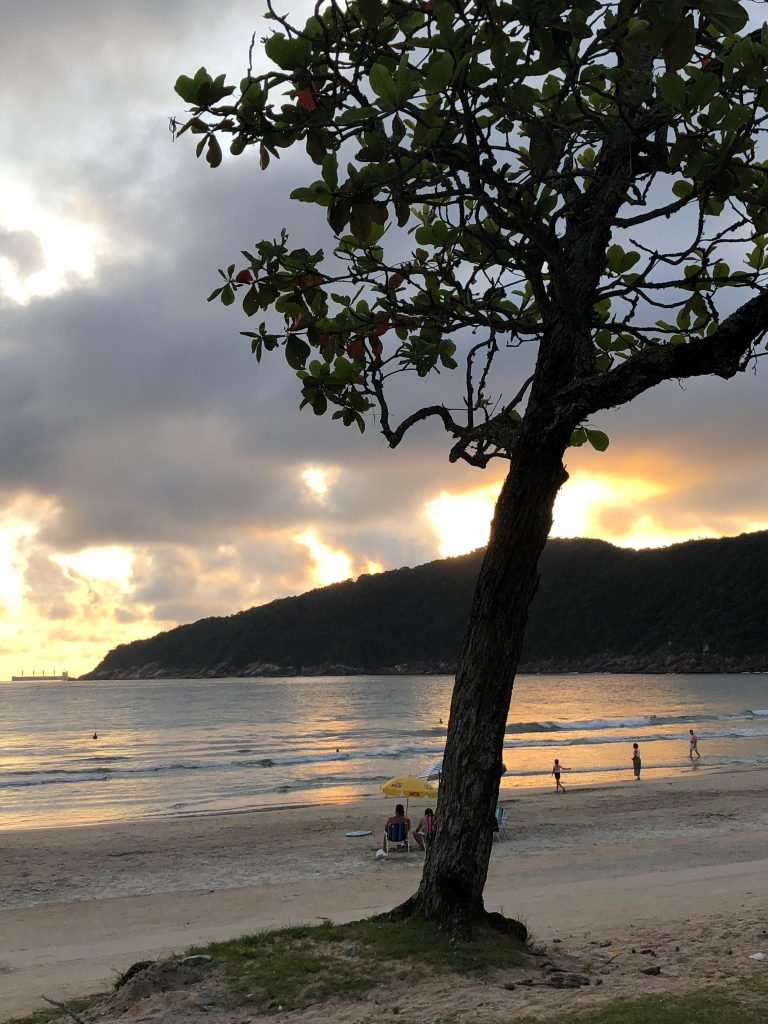
This is the third and final blog in a series that has explored the making of Guarujá, and it’s people. I feel a deep sense of belonging to this territory. Whenever someone asks me where I’m from, I answer: “I’m a caiçara.”
The caiçaras are traditional communities of the south-southeast coast of Brazil. I learnt some traditions from my family, such as fishing, tying knots, identifying fish, fishing for food, recognising birdsong by their whistles, swimming, and feeling the sea. When I was a child, I remember that I used to fish with my grandfather. What I hold represents less than 5% of the Caiçara knowledge. I know much of it was lost with the accelerated urbanisation of the city. I used to fish in a place that now is a mall. Because of this, when I was little, I didn’t learn many things. My family left the traditional communities in search of formal and informal jobs: my grandmother, for example, painted nails and cut hair, but she remembers her childhood differently, as I record in a previous blog. She told me that she swam in the rivers, went to the sea to fish, and grew her own food. Small reminders of a way of life that is rare in the city today.
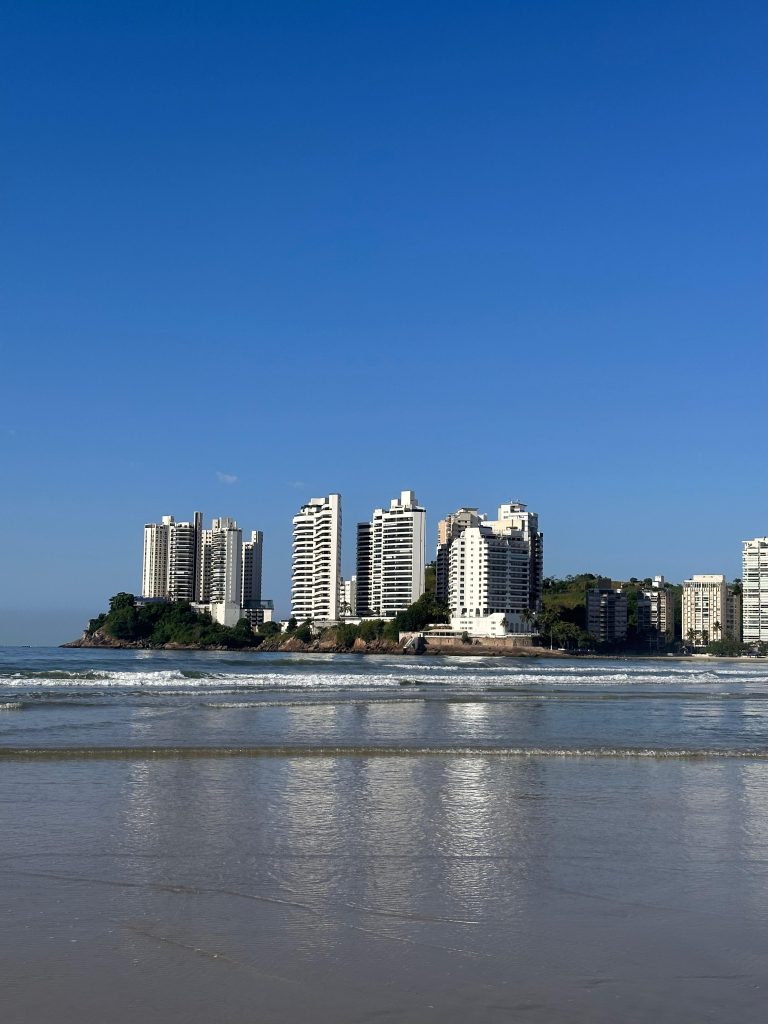
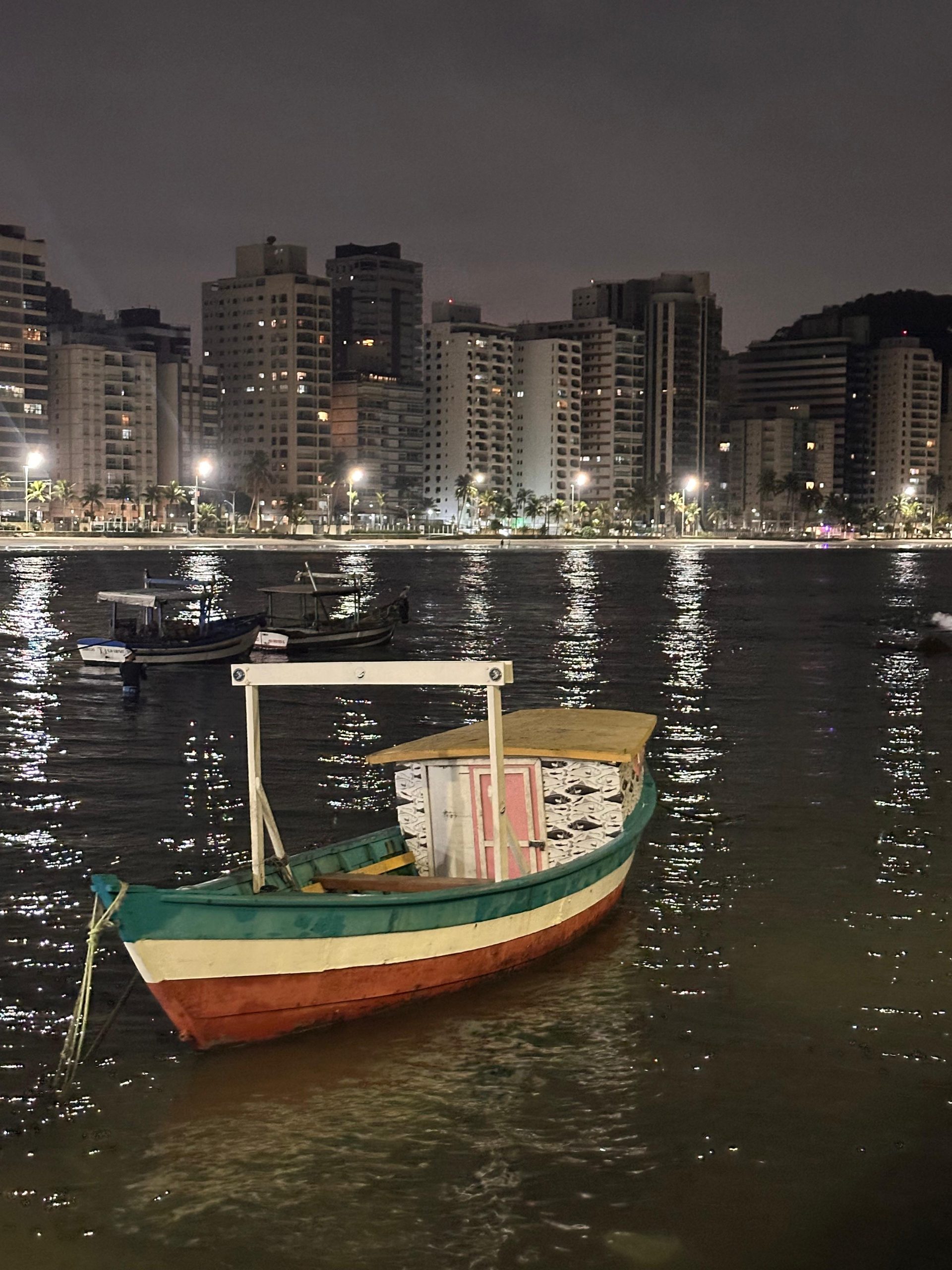
Guarujá has few visible historical traces. Older buildings have been replaced by large developments geared towards tourism, which in the summer receive more than two million people. Where there were once stone houses built from beach rocks, we now see concrete and plastic pollution on the beaches and in the sea. This rapid urbanisation has brought infrastructure problems that persist today: water shortages during the high season, flooding during heavy rains, and traffic congestion caused by thousands of cars.
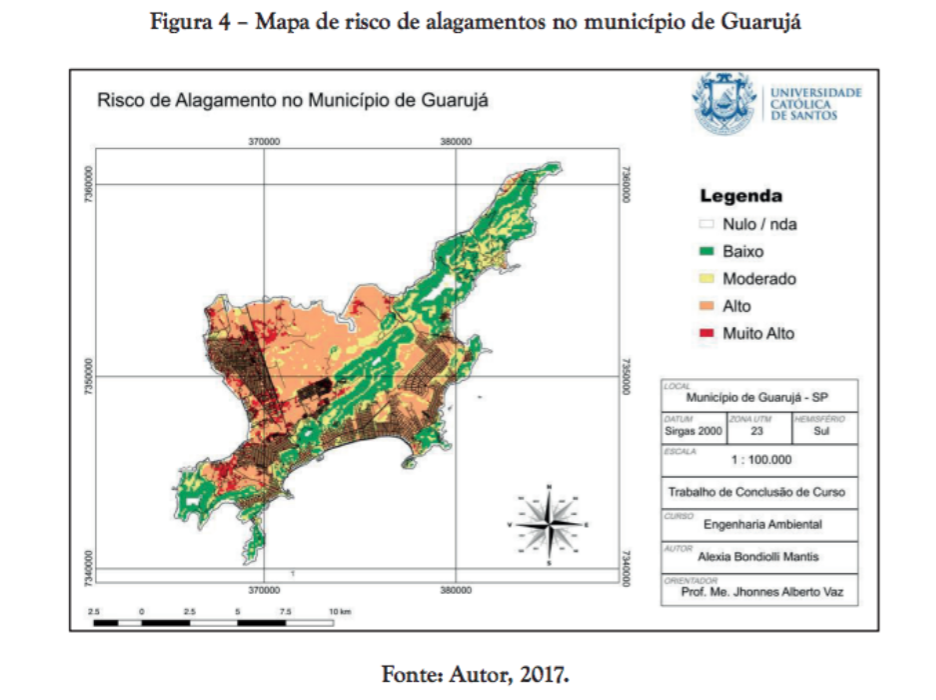
The city presents a striking picture of social inequality, which becomes even more evident during episodes of heavy rainfall. Affluent seaside areas, with large buildings and well constructed urban infrastructure, tend to suffer fewer flooding incidents due to more effictive drainage systems. The reality is very different in peripheral regions. In communities and favelas further from the centre, the lack of adequate infrastructure exacerbates the effects of storms, resulting in flooding, landslides, and significant losses for residents.
Recent events reinforce this contrast. Storms have caused flooding, displacement, and even dangerous situations on hillsides, highlighting the vulnerability of these areas (Agência Brasil, 2026; G1, 2026; CNN Brasil, 2026). In some cases, rainfall exceeded 200 mm in just 24 hours, causing widespread damage and disruption (CNN Brasil, 2026), and in certain instances, landslides in peripheral areas (G1, 2022). This pattern is not new, having also been observed in earlier events, demonstrating a persistent structural problem in the city (G1, 2019).
In the map below, the areas marked in orange and red indicate flood-risk zones in the city. (a map from Guarujá.
To give a personal example, when I was about five or six years old, I experienced my first extreme weather event: a heavy downpour that flooded streets and pavements. I was with my aunts, who improvised rubbish bags and plastic carriers to protect us while taking us by bicycle from the town centre to my grandmother’s house. As I describe in my previous blog, my grandmother’s house was built on a mangrove area, and even after the rain there was standing water in the streets. I remember seeing rubbish, plastic bottles, and other debris swirling in the drains near her home.
Unfortunately, problems like this still occur. Even after improvements to the canal and road paving, flooding in front of my grandmother’s house continues, and nothing has truly improved. This experience shaped my perception of the world and sparked my interest in climate phenomena, leading me to reflect on how I could help transform my city.
I developed a desire to study climate change and politics. At 18, I worked in construction in São Paulo to save money and move to Oxford, England, with the aim of learning English and entering university. I wanted not only to understand the events of my childhood but also to find ways to make a meaningful impact on the lives of people affected by extreme weather events. That is how I began my degree in international relations and climate change at Aberystwyth University in Aberystwyth, Wales—an experience that opened many doors, including the opportunity to attend my first COP.
It took me a while to understand my role at the COPs. Gradually, I realised that I represented young people, who are extremely important actors in climate negotiations, for the present and future of our planet. Today, I admit that I feel somewhat disappointed with the COP processes and COP30, but I still believe in the importance of youth participation, civil society, and traditional communities in decision-making.
The case of Guarujá illustrates how the absence or ineffectiveness of public policies can intensify the combined impacts of unequal urbanisation and climate change. It is a local example of a global problem, in which vulnerable populations continue to be disproportionately affected.
When I moved to the United Kingdom, I realised that what I missed was not the buildings, the streets, or the city’s routine, but the sea, the salty smell of the air, the constant sound of the waves, and the sea breeze. Whenever I return to Brazil, it is in the ocean that I reconnect with myself. I spend hours in the water, feeling its strength, feeling the sea, as if I were part of the ocean. However, being in the ocean, I always find litter, lots of plastic and pollution. It is there that I most clearly understand the deep connection I have with my home, Guarujá – even though we have both changed – which is why I feel that I am still a Caiçara.
This blog is part of a conversation between CAMAMAZON project members on our relationship to the territories of a multi-territorial ethnography. For more in the series, see: Territories.