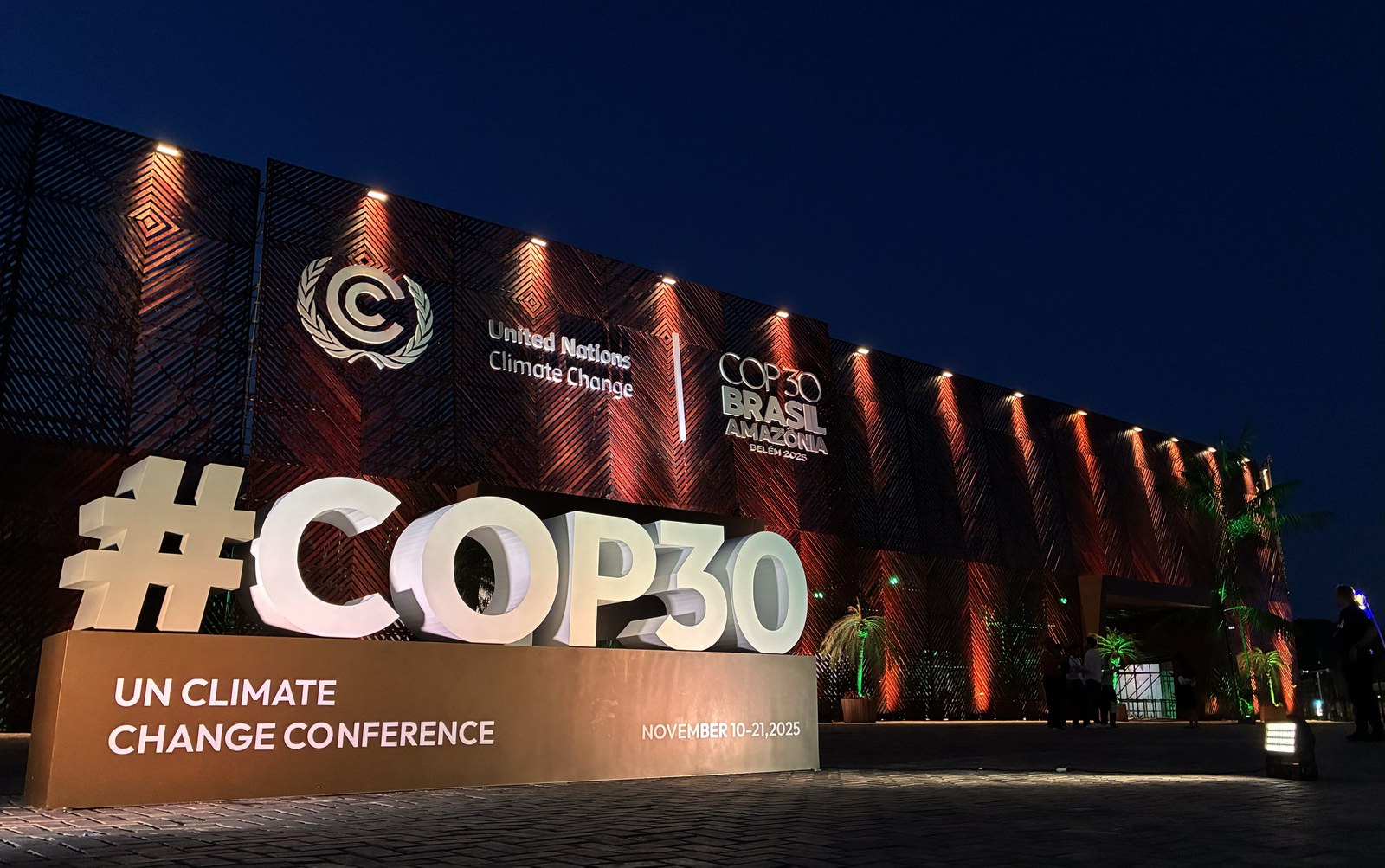
To be cited as: Menezes Assef, Matthaeus. 2026. “COP30: Expectations, hopes, and the reality I experienced at yet another COP” CAMAMAZON. Available at: https://camamazon.aber.ac.uk/2026/01/06/cop30-expectations-hopes-and-the-reality-i-experienced-at-yet-another-cop/ (accessed xx/xx/xxxx).
According to André Corrêa do Lago, COP30 would be the COP of implementation, of change, and the one that would bring deep reflections and concrete actions among countries. In one of his letters, he used the word “mutirão“, a collective effort, highlighting the importance of uniting all nations around a common cause. This gave me a great deal of hope that this COP would be different, and it filled me with expectation. I truly believed this would be the COP of truth, as President Lula himself stated.
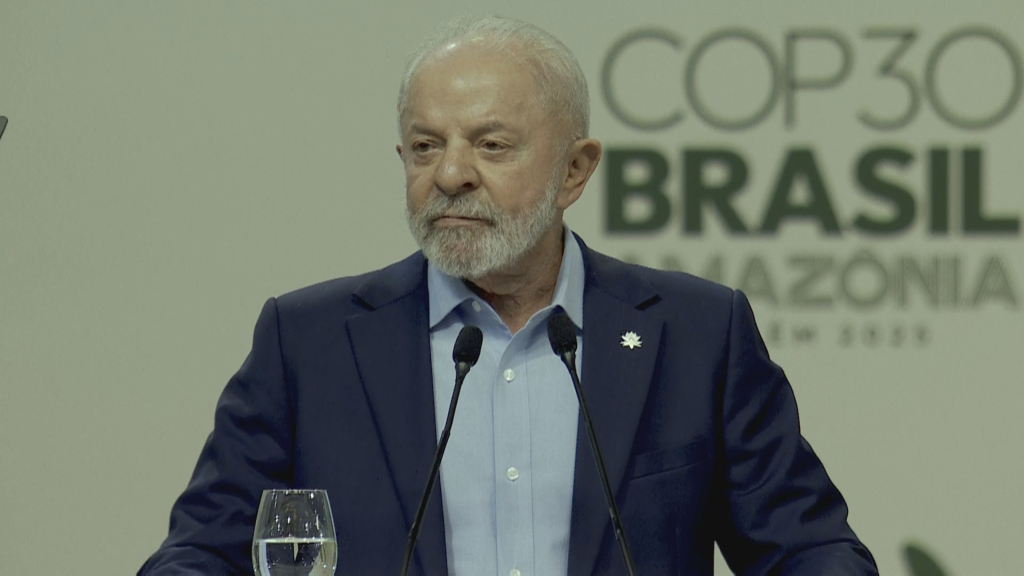
Inside the conference, it was the first time I genuinely felt hopeful, as though something new could happen. This feeling grew when I interviewed the Presidency of COP30 for my Master’s thesis, and as I wrote in my reflections on the Presidency. These feelings were further reinforced when President Lula announced that this would be the COP to move towards the end of fossil fuels and deforestation. He identified this as the major challenge for countries during the two weeks of negotiations, and indeed, it was.
Many striking moments unfolded during COP30. One of them was the People’s Summit, held at the Federal University of Pará (UFPA). The People’s Summit brought together more than 50,000 people and more than a thousand organisations from across the world. On the fifth day of the event, I observed a powerful mobilisation of communities affected by climate change – trade union movements, political groups, young people, Indigenous peoples and many other groups committed to discussing local and global solutions to the climate crisis. There were several other vibrant and inclusive spaces across Belém, such as the COP houses, for the people without badges to discuss COP30 topics outside the official venue. They included the Chico Mendes House, the Youth City, the Ninja House, and other civil society initiatives, all drawing participation throughout the two weeks. Knowing that civil society was present in such strength gave me great hope. It felt, genuinely, as if this would be the People’s COP.
Another positive moment outside the conference was the Global Climate March, which filled the streets of Belém with around 70,000 people. Under the theme “The answer is us!”, the march clearly expressed the urgency and mobilisation of civil society in demanding concrete action to tackle the climate crisis. As at the People’s Summit, the march brought together diverse civil society groups. The last COP march I had taken part in was at COP26 in 2021, where just over one hundred thousand people gathered. This march, though slightly smaller, was equally powerful. Once again, I felt the strength of collective action telling us that change cannot wait, and that solutions must be built with the active participation of those most affected by the crisis. This gave me hope that civil society might be heard inside the COP, and all that collective power made me optimistic about what could come. I truly believed that this energy would echo inside the negotiation rooms.
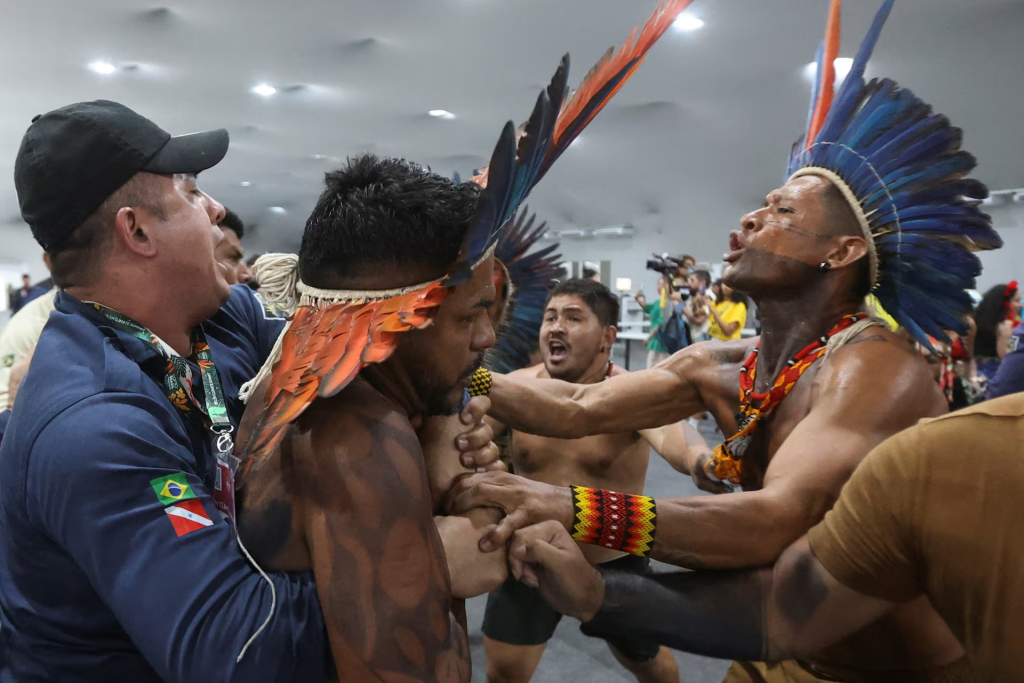
Another important milestone of this COP was the record participation of Indigenous peoples. Around 3,000 indigenous representatives were in Belém, with 400 from Brazil accredited to the Blue Zone, where the negotiations take place. The previous record had been at COP28, with approximately 350 Indigenous representatives from around the world. This participation is extremely important, yet many Indigenous leaders still reported that they were not listened to or able to effectively participate. That is why several protests took place, with Indigenous peoples demanding that their voices be heard in the negotiation rooms. One protest occupied the entrance of the COP, pushing through UN security and demanding justice.
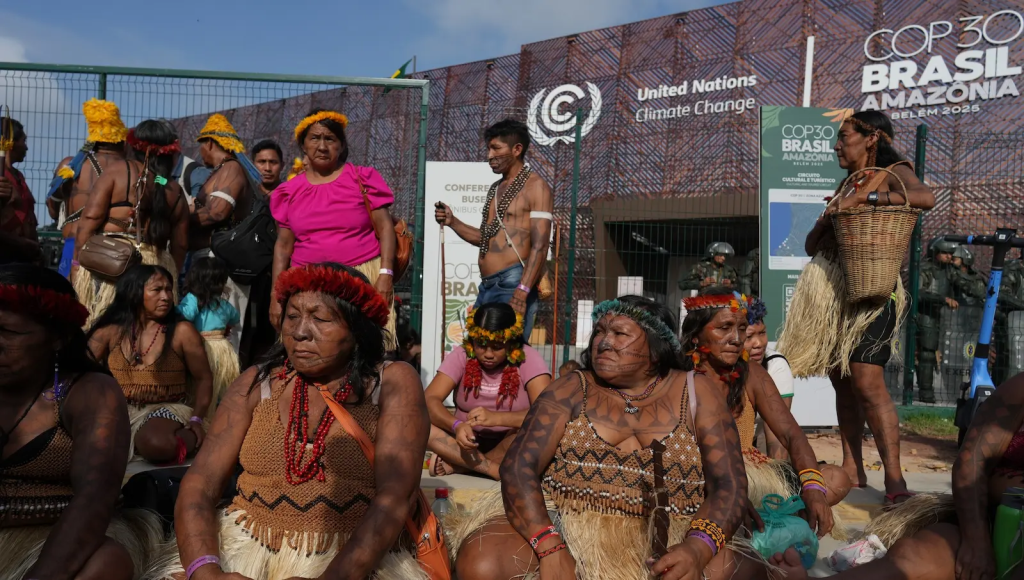
Another striking moment happened on 14 November. I arrived at the COP at 9 o’clock, where a corridor of Munduruku Indigenous representatives had already formed, trying to speak with the conference organisers (the COP30 Presidency, President Lula and Ministers). At around 11:30, the Munduruku peoples met with the COP President, André Corrêa do Lago, the Minister for Indigenous Peoples, Sonia Guajajara, and the Minister for the Environment and Climate Change, Marina Silva, inside one of the meeting rooms for a conversation. After two hours of dialogue, the Indigenous leaders delivered a document demanding the revocation of a decree that establishes a waterway plan involving the Tapajós, Madeira and Tocantins rivers. They also reported that cargo transport contaminates the rivers, affects fishing and restricts the daily lives of riverine communities. Additionally, they called for the cancellation of Ferrogrão, a railway between Mato Grosso and Pará, currently suspended by the supreme court (STF). The Ministers and the COP President stated that the demands were legitimate. For me, this was also an important moment in the politics of the COP, where those affected by these development projects were able to use the conference to voice concerns about Brazilian domestic policies and demand change. I am not sure they could have received this visibility in any other national space or forum.
At the same time, as an observer, I do not believe that Indigenous peoples were truly heard or represented as they should have been. After this episode, the event’s security increased threefold, perhaps fourfold.
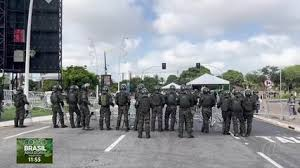
I saw only the Brazilian Army providing security, carrying out strict checks far from the entrances. This gave me the feeling of being in an authoritarian environment. All the hope I had that this would be the COP of truth, the COP of the people, the COP of collective effort, began to fade. I realised that it might not be so different from previous conferences after all.
And in the negotiations, the same pattern that I witnessed at the past five COPs repeated itself: the interests at the table were not focused on listening to Indigenous peoples, civil society or science, but on defending each country’s economic interests. Saudi Arabia, for instance, did not agree with the final Mutirão text, since including the words “reduce” or “phase out” fossil fuels would threaten the country’s economic survival and sovereignty. For this reason,Saudi Arabia, and over 80 countries whose economies heavily depend on fossil fuels pushed to change the text, resulting in a document without the expression “end of fossil fuels”.
I still firmly believe that countries should prioritise climate mitigation to secure a better future, especially considering that we are currently moving in the opposite direction with emissions still rising. Countries need to think about the future of our species, not merely their own profits. As Alanis Obomsawin once said: “When the last tree is cut down, the last fish eaten, and the last stream poisoned, you will realize that you cannot eat money.” Perhaps we are blinded by money, unable to see the future we are shaping and what it may become without a fair climate policy that considers the entire biosphere — a future we cannot survive. For this reason, we should prioritise science. The latest IPCC report, AR6, has shown several possible scenarios, including the most pessimistic one, in which the planet may reach a 4°C increase by 2090 (Page 7) . In other words, science should be at the centre of the COP, and specialists should guide negotiations from the beginning.
In light of the disappointment I felt when I observed so many political actors at this COP acting primarily in defence of their own interests, many reflections arise on how we can improve future conferences. Although progress is only being made in small steps, it does exist, and we are indeed in a process of change. The next COP can and must be better than the previous one.
To achieve this, it is essential to expand the participation of civil society and Indigenous Peoples in future COPs. These actors were fundamental to COP30, and despite the challenges and limitations faced, this COP clearly demonstrated the strength of popular mobilisation. It was the conference with the highest level of civil society participation to date, which resulted in strong public pressure through demonstrations and protests, as well as significant achievements.
Among these victories is the unprecedented inclusion of Afro-descendants in the documents on Just Transition, the Gender Action Plan, the Global Goal on Adaptation and the Mutirão. Likewise, the strong participation of Indigenous Peoples contributed to the demarcation of more than ten Indigenous territories, advances in the guarantee of territorial rights, and the creation of the Tropical Forests Forever Facility (TFFF).
I had high expectations for COP30, but I was disappointed with the outcomes and the closed-door negotiations. I had believed that this conference could be historic, as the Paris one was. However, I did not perceive genuine representation of everyone involved. Civil society needs to be heard, respected, and included in decision-making processes. For me, working to ensure this participation continues to grow is essential and the hope that I move forward with.